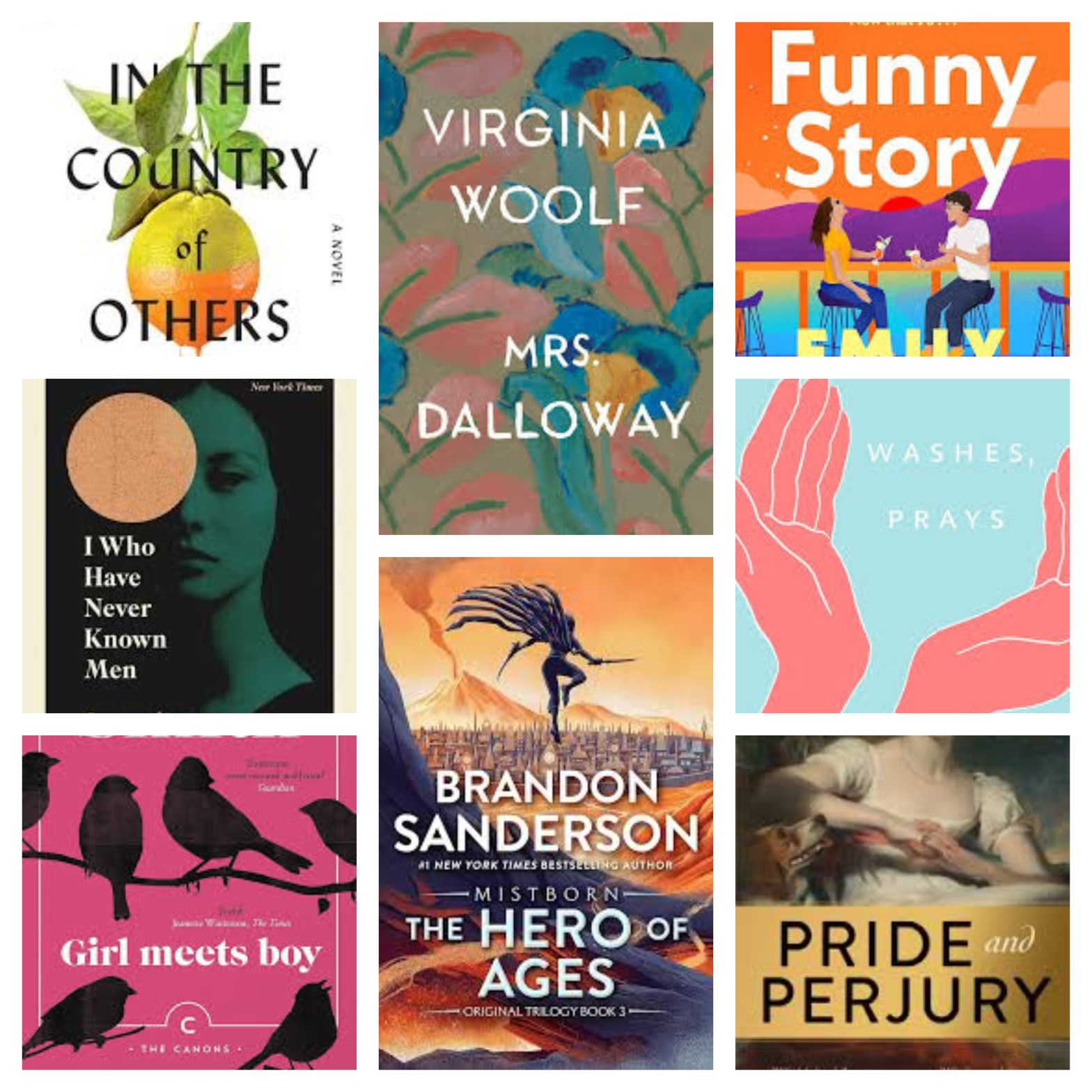
In The Country of Others by Leïla Slimani
In The Country of Others is a lyrical and character-driven historical fiction novel, loosely based on the life of Slimani’s grandmother. During World War II, Mathilde, a passionate and rebellious Frenchwoman, falls head over heels for Amine, a dashing Moroccan soldier who is serving in the French army. When the war ends, the young lovers marry and move to Morocco where tries to make a success of the rocky and isolated family farm. As the rush of their romance dies down, Mathilde finds herself increasingly isolated, frustrated by the inhospitable climate and the tensions caused by her status as a foreign woman married to a local man. Equally Amine finds himself frustrated by her lack of understanding of his culture, her unwillingness to be a traditional Moroccan wife and the disdain that those of her culture shows him. as tensions begin to flare during Morocco’s battle for independence from France, this family finds itself caught in the crossfire, held apart for their foreignness but equally striving for their own independence and a brighter future of the country that they have chosen. This is a fascinating novel that shines a light on an area of history I knew little about, capturing the sweltering heat of Morocco, the passion of the independence movement and the crushing isolation of fighting to make a life in a space that does not welcome you.
Mrs Dalloway by Virginia Woolf
On the surface, Mrs Dalloway sounds like a pretty straightforward, even potentially dull, novel about a middle-aged socialite planning yet another party. The genius of Woolf is the way that she reminds us how even the seemingly-carefree society woman buying fresh flowers is carrying a huge, complex human story with around with her. Told in a stream of consciousness, Woolf not only cracks open the titular Clarissa Dalloway’s psyche, dwelling on her past loves, choices and dramas as she dwells on their impact and what they will mean for the rest of her life, but she uses Dalloway as a gateway into a host of other characters whose path she crosses on this fateful day. From the fragile and shell-shocked Septimus Smith, to the rejected and emotional Peter Walsh, to the spiky and embittered Doris Kilman, Woolf fluidly weaves together these lives into one unifying narrative that weaves together moments of heartbreaking isolation with biting critiques of the repressive nature British upper classes and depictions of PTSD and mental health that are decades ahead of their time. Don’t be fooled by the length of the book, although it is slender, there is some weighty material within.
I’m not generally a fan of romance novels (in the conventional sense of the term) but Emily Henry’s are a significant exception to that rule. I think the reason for this is because her stories tend to focus on characters who wouldn’t usually be at the centre of a love story and Funny Story is a great example of this. The novel opens with Peter calling off his wedding and running away with his childhood best friend Petra, the girl who has always been there for him. But Peter and Petra are not the heroes of this story. Instead we’re focused on Daphne, Peter’s jilted ex-fiancee who moved to his hometown ahead of the wedding, and Miles, Petra’s scruffy ex-boyfriend who no one ever thought was good enough for her. Finding themselves unceremoniously tossed to the side, casualties of Peter and Petra’s epic love story, Daphne and Miles find themselves unlikely roommates as they try to recover from heartbreak and get their lives back on track. But when they receive invitations to Peter and Petra’s wedding after a night of drowning their sorrows in red wine, Daphne and Miles decide that the best way to screw with their exes is to attend their wedding as a couple. Naturally it doesn’t take long for the lines between what is fake and what is real to become somewhat blurry but as wacky as the premise is, Henry’s stories are always grounded in a strong emotional reality that will have even hard-hearted cynics rooting for a happy ending.
I Who Have Never Known Men by Jacqueline Harpman
I Who Have Never Known Men is a strange little book that leaves you with more questions than answers. If you can make peace with that, you’ll find something really special though I can see why others might find it maddening. It centres around an unnamed protagonist who has been raised in captivity alongside 39 other women. She is the only prisoner to have no memory of her life in the outside world and for her never seeing the sun or being held by another person are simply facts of life. When the planets align and the women are faced with a chance for escape, she emerges from the darkness into an alien world and must find who she is when the restraints are removed. Fundamentally this is a story that digs deep into what it means to be human, even if all of the markers of humanity have been stripped from you. Achingly bleak and haunting while still, against all odds, hopeful. I will be thinking about this book for a long, long time to come.
The Hero of Ages by Brandon Sanderson
If you have been wanting to get into Brandon Sanderson but don’t know where to start and find the idea of the Cosmere a little intimidating, stop what you are doing immediately and pick up the Mistborn series. Seriously. Go do it now, read a couple of chapters, then come back and finish reading this review. I’ll wait. The Hero of Ages is a perfect combination of technical mastery of storytelling and emotional mastery of character work. Every single new piece of information revealed slotted into place like a beautiful puzzle piece and every plot twist had me kicking myself, asking how I didn’t realise earlier. This is truly a story which has been woven with the care and attention to detail that you only see in true works of art and my mind truly boggles as to how Sanderson has crafted something so stunning and it’s allegedly not even his best work. Truly mind-blowing if true. But what takes it to a whole other level for me is how many emotions were wrung out of me by the incredible character work. Vin, Elend, Spook and Sazed (oh god, Sazed) truly have some of my favourite character arcs in fiction. It’s so beautiful and I will never be normal about this. It’s perfect, I don’t know what else to tell you, go read it.
Washes, Prays is a slender but remarkable novel in verse, meaning the story is conveyed in a much more lyrical and abstract way than some readers might be used to. It tells the story of Coocoo, a young and devout Muslim woman living in Toronto, who finds herself heartbreakingly lonely although she has the steadfast companionship of her best friend Nouf, because she is living a life devoid of romantic love. Feeling as though she has been forgotten by god, she is all too vulnerable to falling madly and hopelessly in love with the first man to make her feel special. The catch? He’s already married. But how can a love that feels so holy be a sin? And how can Coocoo call herself a woman of faith as she wilfully sins again and again? And what happens when you cut yourself off from all the keeps you grounded for the sake of a love that is doomed to fail? These are the questions that Naga toys with over the course of this brief but impactful novel, channeling Coocoo’s disorientated and chaotic feelings through the passion of her poetry. If you like your novels a little more grounded in prose, this might not be for you but if you’re a poetry lover who’s maybe nursing a broken heart you should absolutely check this out.
Fun fact: I wrote my undergraduate dissertation on queer women in Imperial Roman literature after being inspired by the story of Iphis and Ianthe the first time I read Ovid’s Metamorphoses. For those not familiar with this mythological deep cut, Iphis is a young woman raised as a boy by her family and her true sex is kept a secret. She falls in love with her best friend Ianthe and the two of them are set to marry, but the night before the wedding Iphis has a huge panic about not being able to sexually satisfy her bride-to-be due to her lack of penis. The gods decide to solve this problem by transforming Iphis into a man, with all of the attendant parts. Iphis and Ianthe are then married and live happily ever after. On the one hand, I loved this myth because it’s so unusual to get a happy ending anywhere in Metamorphoses and to get one in a queer love story felt downright amazing. But on the other hand, the ending completely erases the queerness of the story due to the fact that male authors in Ancient Rome seemed to struggle to imagine how two women might satisfy each other. Enter Ali Smith as a sort of dea ex machina to modernise the story and embrace all of the queerness, gender fuckery and sexual fluidity that makes the original so captivating. The is a beautiful novella about resistance, rebellion and transformation in a way that honours Ovid’s earlier work while creating something entirely new. Whether you’re a Latin nerd or just looking for some excellent Pride Month reading, you cannot go wrong with Girls Meets Boy.
Pride and Perjury by Alice McVeigh
Thank you to Warleigh Hall Press and Netgalley for an ARC of this book. I’m always a sucker for Austen variations and Pride and Perjury did not disappoint. This is a collection of twelve short stories, largely set within the extended world of Pride and Prejudice but also featuring further glimpses into the characters of Emma, Love and Friendship and Northanger Abbey. McVeigh’s writing style feels very in tune with the original novels and her stories therefore feel like very plausible extensions to these well-loved plots. So if you’ve ever wondered how the elopement between Lydia and Mr Wickham really went down, how Mr Elton persuaded Miss Hawkins to marry him so quickly after Emma rejected him and what was going through Lady Catherine de Bourgh’s head when she burst into Longbourne to try to get Elizabeth Bennet away from her nephew, then this is the collection for you.
 Kindled Spirits