My Month in Books: June and July 2025

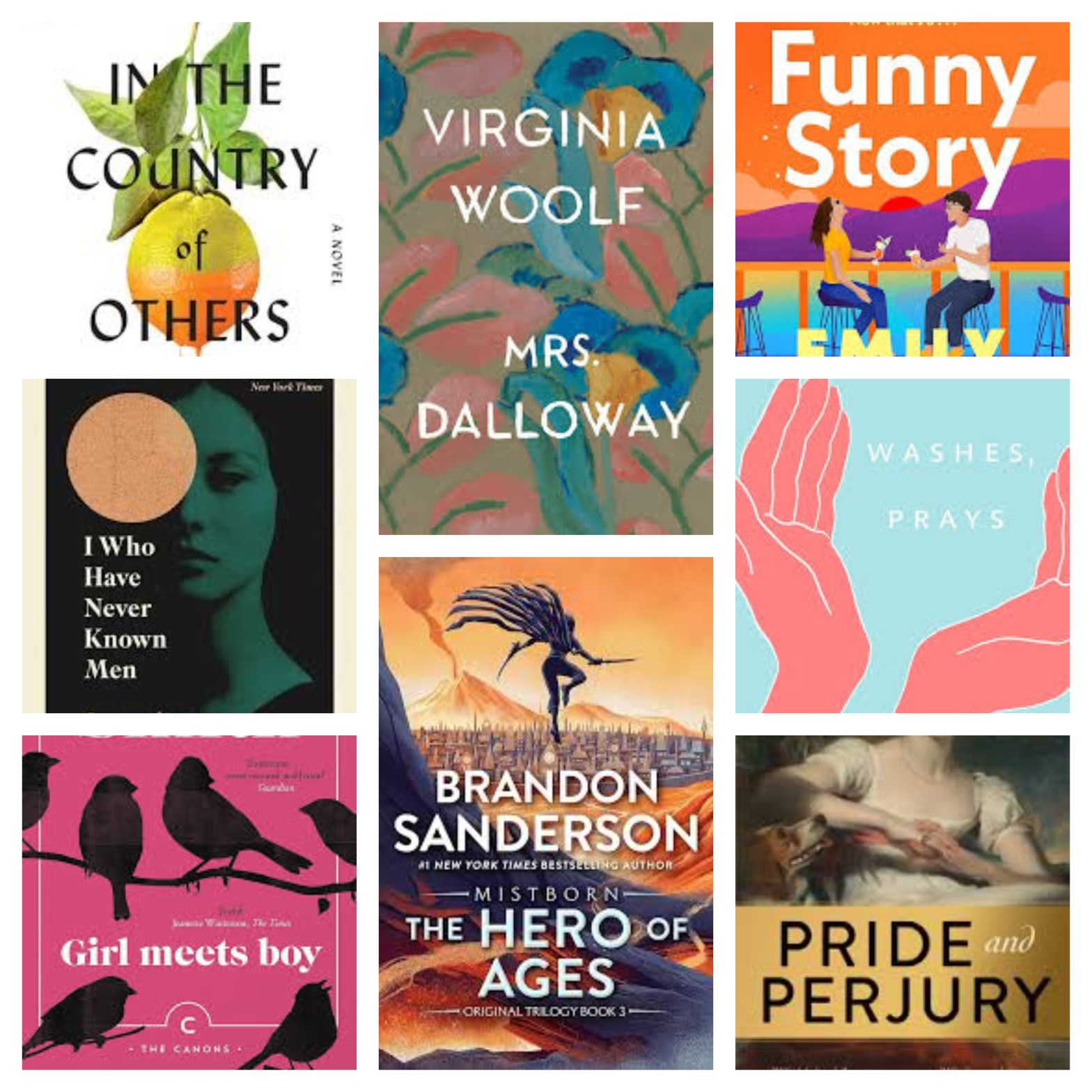
Love in Exile by Shon Faye

In Love in Exile Shon Faye examines the different ways society politicises and excludes people from heteropatriarchal romantic ideals of love. When asked to describe this book to my friends, I simplified it down to ‘it’s like Everything I Know About Love turned thirty and went back to school to get a masters.’ Drawing on her own experience of exclusion as a trans woman, Faye challenges her reader to consider need for a more all-encompassing definition of love that includes friendship, community building and personal forms of spirituality. Faye has a gift for making the political personal and vice versa, seamlessly blending intensely personal sections on addiction, abuse and motherhood with anti-capitalist critique and analysis of Engels, hooks and De Beauvoir. I have already gifted this book to one friend and can see myself pressing it into the hands of many more.

Interview with the Vampire by Anne Rice

It is to my eternal shame that I made it through my emo teen years without ever actually reading anything by Anne Rice, but, as I insisted at the time, it’s not just a phase and the allure of the gothic has endured into my thirties. Unfortunately it didn’t quite live up to my expectations as Interview With the Vampire is somewhat low on plot but heavy on vibes (again, much like my teen years). If you’re reading this expecting to be kept on the edge of your seat by the plot, maybe pick up something else. But if you’re happy to putter along through the blood-soaked cobblestones of New Orleans and Paris for an intensely homoerotic, sensuous and vengeance-filled Southern Gothic extravaganza then it might also be time for you to pick this book up.

Anna Karenina by Leo Tolstoy

Hooo boy. This was really a book of two halves for me. One the one hand, an achingly beautiful tragedy of self-destructive passion in which a woman tries to break free from the strictures of high society only to be crushed, witty and insightful prose, and a sparkling cast of supporting characters who are all dealing with their own jealousies, betrayals, shames and, above all, loves. On the other hand, if I ever hear another word about Konstantin Levin and his goddamned land ever again I am going to shoot myself. I get it, he’s a stand in for Tolstoy, yes I know he’s how we get insight into the politics of the time and sure he’s supposed to make us realise how shallow and venal everyone else is, but I simply do not care. Never again.

The Beautiful and Damned by F. Scott Fitzgerald

The Beautiful and Damned has everything that you read F. Scott Fitzgerald for; raucous hedonism, moral bankruptcy and a whole lot of jazz and liquor. It centres around the marriage of Anthony Patch and Gloria Gilbert, two New York City socialites with a shared philosophy of not giving a damn about anything, as they wait to come into a presumed inheritance that will make them independently wealthy. But as the inheritance fails to materialise, their hard living begins to catch up to them and their mutual selfishness erodes whatever love might have once existed between them causing them to descend into cynical bitterness and indolence. Once again Fitzgerald’s sparkling prose captures the dark side of the glittering jazz age. If you’ve only indulged in The Great Gatsby so far, take this as your sign to delve deeper into Fitzgerald’s other work.

All The Light We Cannot See by Anthony Doerr

A sweeping historical fiction in which two seemingly disparate lives collide amidst the devastation of Nazi-occupied France. Marie-Laure is a blind girl who flees Paris with her father, the chief locksmith at the Museum of Natural History. Little does she know he has been tasked with hiding one of the Museum’s most priceless treasures from the Germans. Werner is a German orphan who is utterly fascinated by radio technology but seems destined for a life in the mines. However, when his talent comes to the attention of the Nazis, he finds himself fast-tracked to the front lines. Both children struggle to survive in a world that seems determined to crush them before their paths eventually cross at the Battle of Saint-Malo. Bound together by a familiar radio signal, Marie-Laure and Werner find moments of light in the last dark days of the occupation. This is a beautifully written book that manages to capture the horrors of war and the death of innocence while still finding ways to focus on the ways that even in the most dire circumstances, people find ways to be good to one another.

Kala by Colin Walsh

Kala Lannan went missing twenty years ago and her best friends still haven’t quite processed the trauma of losing her. Famous musician Joe drowns himself in drink and the shallow adoration of his fans. Mush hides behind the counter of his Mum’s cafe. Helen buries herself in her work as a journalist and it takes her father’s wedding to drag her back home. On the eve of their unexpected reunion, Kala’s remains are finally found in the woods, two more young girls mysteriously vanish and the old friends are forced to confront the ways in which they are complicit in the events that led up to Kala’s disappearance. Kala is a story of grief, trauma and the ways in which people are willing to look the other way to avoid seeing the human cost of the privileges that they take for granted. It’s also extremely readable and strikes a great balance between being plot-driven and having complex, well-rounded central characters. Whether you’re looking for a book that will keep you flipping the pages on your sun lounger while you’re on holiday or something that will generate a lot of interesting book club discussion, Kala will do the job.

Harrow the Ninth by Tamsyn Muir

I’m not gonna lie, this is a tough book to love. However, that is extremely fitting for a book that centres on the one and only Harrowhark Nonagesimus, someone who is intense and off-putting even by the exacting standards set by necromancers. Fresh off the trauma and bloodshed of the first book in the Locked Tomb series, Harrow has ascended to Lyctorhood but something is off. Her sword is making her throw up, her body is falling apart and her memories of recent events seem…fragmented to say the least. Thus begins an mindbending puzzlebox of a book starring the galaxy’s most unreliable narrator. There’s murder, mayhem, the vengeful ghosts of dead planets themselves and, I mean this from the bottom of my heart, the most phenomenal dad joke in the history of literature. Muir is a genius, a lunatic and a gremlin and I put my faith in her to take me through this story. I felt richly rewarded but given I only understood what the fuck was going on approximately 20% (?) of the time, I also understand why others noped out. Only approach the Locked Tomb if you dare.

The Will to Change: Men, Masculinity, and Love by bell hooks

In The Will to Change, bell hooks takes the surprisingly radical position that men are human beings who are worthy of love. Her full-throated call for feminists to create spaces in which men are able to be vulnerable and soft and express their emotions was honestly incredibly moving and I got emotional myself thinking of the men in my life who I know have been put in positions where they’ve felt the need to swallow their pain and sadness in order to be considered a real man. hooks examines how the patriarchy punishes men for being in touch with their emotions and therefore erodes trust and inhibits true love (not necessarily in its romantic form) being able to flourish between men and women. However, I think the thing that surprised me the most about this book was that it was written in 2003. So much of this seems to ring true to the times we’re living in now where we’re seeing increasing numbers of young men following the Andrew Tate model of ‘alpha’ masculinity. It’s an indictment of how little has changed in the last twenty years and shows how deeply necessary hooks’ work is. If you’re a man or if you love a man, this is a book I would recommend.

Sourcery by Terry Pratchett

Once again all life on the Disc is under threat due to some serious magical shenanigans and once again, unfortunately, it’s all down to Rincewind to save the day. There is truly nothing the lowers my cortisol levels like reading a Discworld novel and Sourcery is a great example of why I love them. It’s got magical metaphors for the cold war, it’s got a heroine who is torn between her love for hairdressing and her irrepressible urge to stab people, it’s got meaningful and beautiful things to say about the way that power corrupts, it’s got daddy issues up the wazoo and it’s got an orangutan librarian who is the most sensible person in the whole series. It is funny, it is mad and while it’s not the strongest offering in the Discworld series, it makes me so happy. What more can I ask for?

Orpheus Builds A Girl by Heather Parry

Thank you so much to Steerforth & Pushkin and Netgalley for this ARC. Yikes. And let me say that again for those who did not hear me in the back: YIKES. This book is not for the faint of heart. It will make you furious and queasy and upset and then you’ll realise it’s based on a true story and you’ll probably want to throw something heavy out of the nearest window. It tells the story of Luciana, a beautiful and vivacious Cuban immigrant living in Florida who contracts tuberculosis. Believing it is their only option, her family agree to let the mysterious Dr Von Tore give her some experimental treatments that he claims can save her life. What they don’t realise is that Dr Von Tore is a disgraced Nazi scientist whose grip on reality is tenuous to say the least and who believes that Luciana is destined to be his bride thanks to a vision he received from his long-dead grandmother. Naturally his ministrations do not save her but Luciana’s family had no way of knowing that her death would have no impact Von Tore’s obsession with her. He will not be denied his promised love and now he has the perfect subject for his true passion project – trying to resurrect the dead. However, Luciana’s beloved sister Gabriela is not going to let Von Tore rewrite his deluded and sick experiments on her sister’s corpse into a lover’s quest. Throughout the novel, Gabriela and Von Tore fight for control of the narrative both literally and figuratively, resulting in an utterly chilling meditation on power, female agency and the ease with which marginalised voices are silenced.

The Age of Innocence by Edith Wharton

Are you looking for the New York high society scandal of Gossip Girl but with a bit more literary heft and a historical twist? The Age of Innocence is the book for you. Written in 1920 but set during the Gilded Age of Old New York, it chronicles the romantic travails of Newland Archer, a man torn between the life set out for him and the life he wants to be living. Engaged to the perfect society heiress, May Welland, Newland cannot help but have his head turned by her beautiful and worldly cousin, the Countess Olenska, who has just returned to New York after a disastrous marriage to a European nobleman. But has he the courage to disregard the strictures and conventions of society in order to be with the woman of his dreams? Passionate, darkly funny and thoroughly ahead of its time, The Age of Innocence is a classic that definitely deserves more attention.

Hot Wax by M.L. Rio

Thank you so much to Headline and NetGalley for this ARC. Hot Wax tells the story of two very different summers in the life of Suzanne Delgado. In 1989 she’s the precocious little roadie touring with her father’s band and taking in all of the sex, drugs and rock n’ roll with the wide eyes of someone falling in love for the first time. Think School of Rock but if there was one child and every single other character was Jack Black. But let’s be real, we all know that the road ain’t no place to start a family and when the bomb of exhaustion, substance abuse, creative jealousies and the bright spotlight of growing fame finally explodes, Suzanne’s right in the blast zone. By 2025, the girl with the stars in her eyes is gone and has been replaced by a cynical photographer with a deeply boring husband and a duplex in suburbia. However, when her father dies and leaves Suzanne his car and all of his effects therein, she embarks on a sweaty, caffeine-fuelled road trip across America looking for answers about where it all went wrong. Rio is incredibly adept at capturing the grimy glamour of life on the road and the lightning in a bottle feeling of watching the best gig of your life while still balancing the dark toll that fame extracts and the way that trauma can echo across years. Having said this, I did find the whole subplot with Suzanne’s husband trying to bring her back to be a touch melodramatic and while I appreciate Rio probably wanted a heightened sense of jeopardy, I think the story could have been strong enough to stand on it’s own without it. Ultimately though I don’t think it detracts from what is ultimately an extremely readable and fun book.

Lost Lambs by Madeline Cash

Thanks so much to Random House UK and NetGalley for this ARC, which was simply bananas. It tells the story of the extremely chaotic Flynn family, in which parents Catherine and Bud are opening their marriage (much to Bud’s disappointment), eldest daughter Abigail is trysting with an older man who may or may not have committed war crimes, middle child Louise is exploring her faith and unfortunately seems to be finding terrorism along the way and, finally, baby of the family Harper is much too smart for her own good and is convinced that local weird billionaire Paul Alabaster is up to something (and she’s right). On a positive note, this story is incredibly readable and very, very funny. On multiple occasions I laughed out loud as I flipped through the pages, eager to see what would happen next. However in terms of what actually happens, I’m not sure that I can say this book has much of a plot. Or perhaps what I mean is that it has so much plot that I felt like I had whiplash and couldn’t actually fully appreciate any of the individual components fully and I’m not sure that all of them were necessarily contributing to the story in a cohesive way. While I enjoyed it very much while I was reading it I felt as if it faded from my mind rather quickly after I was finished because I couldn’t process all of the information I had just received. But hey, maybe your brain is bigger than mine so if the above actually sounds totally up your street, definitely give this a go.

The Turn of the Screw by Henry James

It’s always particularly impressive when a very short book is able to generate a lot of discussion. On the surface, The Turn of the Screw is a beautifully crafted ghost story in which a plucky governess seeks to protect her young charges from the malign influences of the dead, even if the children seem a bit more eager to embrace evil than she’d like to admit. However, if you look a bit closer, you might wonder if it’s possible that our heroine is a victim of her own madness and indeed the only danger to the children is her. Whatever interpretation you prefer, The Turn of the Screw is an eerily gothic enigma of a book that is short enough to read in a day (ideally one when the leaves have started to turn and there is a chill in the air…).

Among the Burning Flowers by Samantha Shannon

Thank you so much to Bloomsbury Publishing and NetGalley for this ARC. This is a tough review for me to write because I love the other two books in the Roots of Chaos series but I just could not get on board with this one. Frankly I can’t even really understand why Shannon wrote it. Are there really people who are crying out to know more about Marosa Vetalda? And Estina Melaugo? Really? I cannot relate but I was excited to give this a chance because I like the rest of the series so much. Unfortunately Marosa spends basically the entire book having exactly zero agency. Things happen to her or on special occasions she may stumble upon some sort of major plot point but broadly speaking she’s just about capable of looking sadly out her window as dragons eat her friends and passing on key artefacts to other, more interesting characters. I’m not saying she needs to be an all-powerful warrior who saves the day but why would you write a book when you know the main character is basically bound by the plot of previous books to sit around and do nothing? Melaugo was more interesting but unfortunately her POV vanished halfway through the book as we caught up with the plot of Priory of the Orange Tree which once again kind of begs the question of why would you bother writing this character in if you’re not even going to sustain their story for the whole book? If you’re a Roots of Chaos completionist or (somehow) a Marosa Vetalda stan, then sure, this book is for you. Otherwise I think you’re probably fine to leave it and for the love of god do not choose this as your entry point into the series, either of the other two books would be a much better choice!
My Month in Books: May 2025

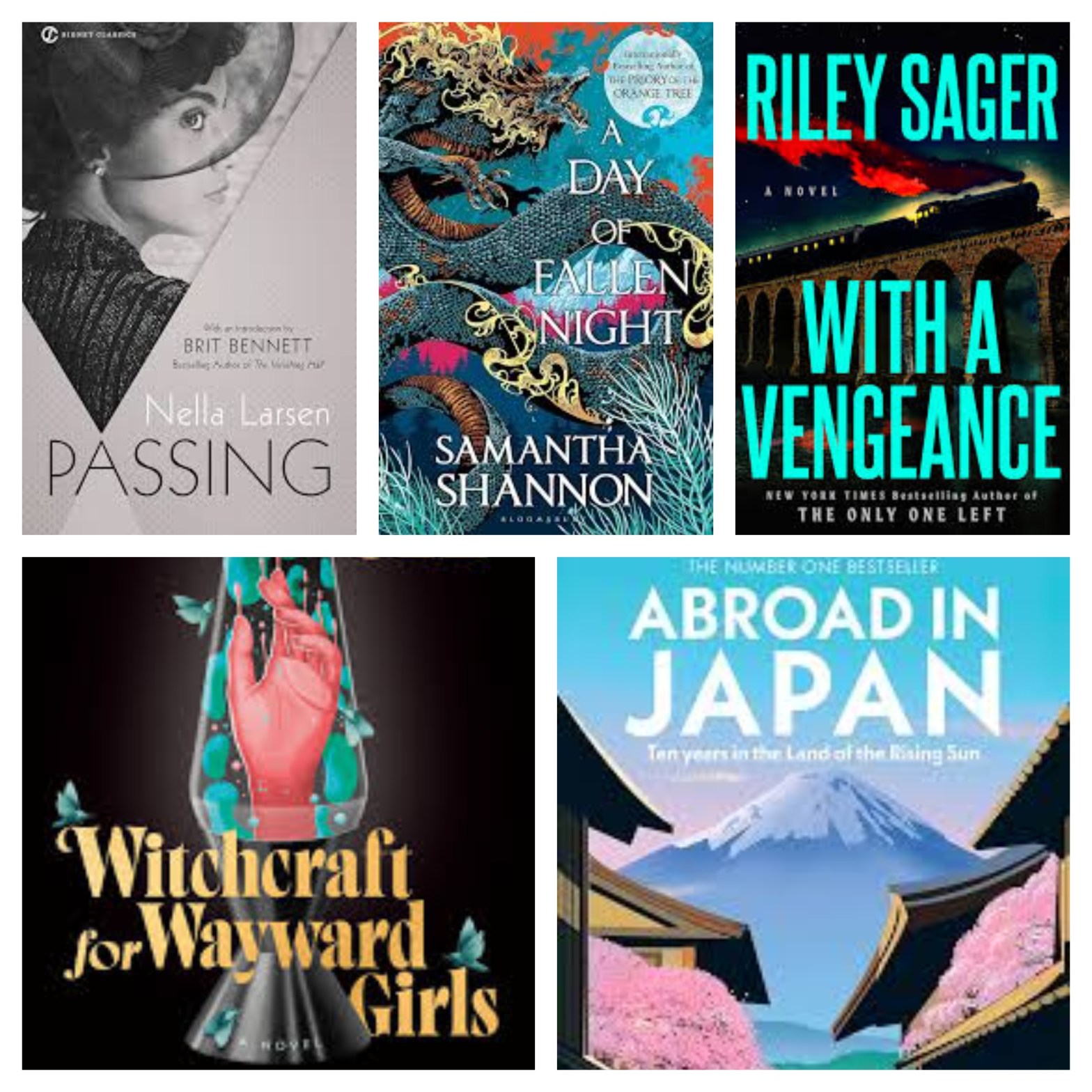
Passing by Nella Larsen

Nella Larsen has been a new discovery for me this year and I’m so glad I’ve finally found her. Passing is the story of two childhood friends whose lives take very different paths. Irene and Clare are both light-skinned black women living in America in the 1920s. But while Irene has married a black man and has a rich and fulfilling life ensconced in Harlem’s thriving black community, Clare has chosen to pass as white. Married to a white man and cut off from her past, always living in fear of having her secret discovered, Clare is living a half-life. When she and Irene reconnect after a chance encounter, Clare increasingly inserts herself into Irene’s comfortable life. Irene is simultaneously appalled and fascinated by the dangerous line that Clare is walking and when their lives become entirely too intertwined for comfort, she is unable to bring herself to stop the violent explosion that breaks the tension. This is a little book that deals with big questions about what it means to live authentically and the steep price that we are willing to pay for happiness.

A Day of Fallen Night by Samantha Shannon

A Day of Fallen Night is a prequel to the excellent Priory of the Orange Tree and the second instalment in Shannon’s Roots of Chaos series. The story is set in a world haunted by the memory of the Nameless One, a great and terrible dragon who, centuries ago, decimated the population and set nations alight. Princess Glorian Berethnet of Inys is part of a royal line whose continued survival is believed to be the chain keeping the Nameless One at bay. The reality is a bit more complicated than that. Tunuva Melim knows that one day the Nameless One will return and she and her sisters at the Priory of the Orange Tree hone their magic and skill with weapons to ensure they are ready to slay him when he does. Meanwhile a young priestess named Dumai knows that not all dragons are to be feared. She has spent her life waiting for the benevolent dragons of the East to awaken from their long slumber and bring water back to her people. The lives of these three women are thrown into disarray when fire-breathing dragons begin to re-emerge – not quite the dreaded Nameless One but certainly enough to bring their homelands to their knees. Although they do not know it, something much more powerful than they can comprehend links them and each has a role to play in saving the world as they know it. Shannon is a master of world building. Each of the nations and cultures depicted in these books feels rich and distinctive and she has brought them all vividly to life. I would say however there are points where it feels a touch bloated – I don’t know that every character or episode or excursion was strictly necessary to the overall plot and there were moments I found myself groaning slightly when a character would set off on yet another journey to accomplish something that could have been done in a less roundabout way. But ultimately I do really like this series and will happily spend time in this fabulous world for as long as Shannon continues to write it.

With A Vengeance by Riley Sager

Thank you to NetGalley and Hodder & Stoughton for this ARC. With A Vengeance is a revenge thriller which centres around the machinations of Anna Matheson. Twelve years after her family was destroyed by an extremely convoluted conspiracy, Anna has lured the six people responsible onto a non-stop luxury train to Chicago. Over the course of fourteen hours she plans to confront these people and, after allowing them to stew in their own guilt for a bit, hand them over to the FBI. Unfortunately the plan goes awry pretty quickly when Anna’s targets start dying, depriving her of the chance to savour her revenge. My main problem with this book was less the increasingly outlandish twists and turns (not gonna even touch the plot holes) and more the way the author talks down to the reader. My pet hate is when authors spell everything out as if I’m incapable of doing any sort of critical thinking and this book was full of that. Definitely not for me.

Witchcraft for Wayward Girls by Grady Hendrix

Pregnant teenage girls who’ve been banished to a home for unwed mothers using witchcraft to get even with the patriarchal structures that are keeping them down? Oh Grady Hendrix, you really do know how to get my attention. This book was everything I’ve come to expect from Hendrix’s work; highly original, unputdownable and absolutely harrowing. The thing that I like most about Hendrix is that he’s so good at making the every day horrors of being a human just as scary as all of the supernatural elements. So many parts of this book were terrifying but but the scariest parts are the mundane body horror of pregnancy and childbirth as well as unthinking cruelty shown to the protagonists by the adults who should have been looking out for them. Because when the supposed ‘good guys’ dehumanise and degrade you, who wouldn’t at least consider making a deal with the devil? If you’ve not already been reading Hendrix’s work, now is a great time to start.

Abroad in Japan: Ten Years in the Land of the Rising Sun by Chris Broad

As a wide-eyed young graduate, Chris Broad applied to a programme that parachutes young English speakers into Japanese schools to help spread the English language. No prior knowledge of Japanese language or culture was required. When he first lands in a in the remote Northern prefecture of Yamagata, he’s barely able to introduce himself to his new colleagues but Abroad in Japan tracks his journey from his early Family Mart chicken-fuelled kanji study sessions to becoming a pillar of the local community. While the book is broadly a fun and light-hearted account of one man’s coming of age and discovery of a new culture, I will say I felt the claim that it spans ‘all forty-seven prefectures’ of Japan was a bit misleading. While Broad does account a trip in which he cycled across all forty-seven prefectures of Japan, he doesn’t actually say anything about the vast majority of places he visited and instead spends time telling the reader about his struggles with editing the Youtube videos he took of the journey. Maybe that’s appealing to some people but I’d much rather here about the interesting places I’m sure he saw. I would say generally towards the end the book feels like it focuses much more on Broad’s career as a Youtuber rather than Japan itself so bear this in mind if you’re looking for more of a travel memoir. Ultimately though I think this was a fun read and is worth picking up if you’re thinking about visiting Japan.

My Month in Books: April 2025

We Have Always Lived in the Castle by Shirley Jackson

We Have Always Lived in the Castle has one of the best opening paragraphs I’ve ever read and the fact that it’s up hill from there is a testament to the craftsmanship of the inimitable Shirley Jackson. Our narrator is Mary Katherine ‘Merricat’ Blackwood, a young woman trapped in a magical-realist prison of her own making, burying hoards of treasures in her garden and casting spells of protection on her home by nailing her dead father’s possessions to trees. When we meet her, it has been six years since her family was almost wiped out after a mysterious poisoning and she lives with the fragments of the Blackwood clan in their dilapidated and isolated family home. Shunned by the local villagers, her only companions are her agoraphobic elder sister Constance, who passes her days in a faded parody of domestic bliss, and her uncle, Julian, who hasn’t been all there upstairs since the poisoning but is determined to set down all her remembers in a definitive book on the crime. However, when their estranged cousin Charles comes to stay after years of careful avoidance, Merricat’s sense of stability will be thrown into disarray. She’ll need all her resources to banish this unwanted intruder and restore peace to her curious kingdom. While the reader cannot help but be charmed by her quirky turns of phrase and mannerisms, they also cannot help but grow increasingly unsettled and disturbed by what lurks behind the doors of the Blackwood house.

House of Leaves by Mark Z. Danielewski

I do not know how to even begin attempting to summarise this book without sounding mad but here’s my best shot: A troubled young man named Johnny Truant discovers a mysterious text in the home of Zampanó, a recently deceased, blind agoraphobe. In this text, Zampanó has undertaken a detailed albeit chaotic analysis of a film called The Navidson Record, which is either a ground-breaking documentary that raises questions about the origins of planet Earth and the fundamental laws of physics or a found-footage-style horror movie hoax. In short, Pulitzer Prize winning photojournalist Will Navidson and his young family discover that their new home is somehow bigger on the inside than it is on the outside. And not in a cute ‘The Tardis’ way, in a ‘horrifying shifting labyrinth that may or may not contain monsters’ kind of way. And things only get weirder from there, because when Johnny Truant tries to find out more about this movie, it apparently doesn’t exist. You should also absolutely not attempt to read this on an e-reader because in some sections the text is upside-down, overlapping or reversed. If reading the above paragraph has already given you a headache, this book is not for you. This is not an easy read. It is demanding, complicated and confusing. However, if you’re brave enough to explore its dark and hidden recesses, there are treasures and horrors to be found. It’s a love story, it’s nightmare fuel, it’s a satire of academic pretentiousness and it will have you questioning your own reality as well as the reality of the book. Enter if you dare.

The Long Way to a Small Angry Planet by Becky Chambers

If you want an uncomplicated, feel-good space romp that’s bursting with the ‘found family’ trope, then have I got a recommendation for you! The Long Way to a Small Angry Planet tells the story of the Wayfarer, a tunnelling ship that creates the wormholes that make high speed interstellar travel possible. She’s crewed by a rag-tag bunch of enterprising beings from across the galaxy, from Sissix the reptilian pilot, to Kizzy and Jenks, the chaotic engineers who hold the ship together, to Lovey, the sentient AI who keeps things from descending into madness. When Rosemary Harper wangles her way aboard the ship under a false identity, she’s looking to run away from her family. But amongst the stars, she finds a whole new one that expands her definition of what she thought a family could be. If you like your sci-fi with a side of lasers, blood and guts and political intrigue, this is not for you. If however, you are looking for character-driven, gentle sci-fi adventure to give you the fuzzy-wuzzies, this will be right up your street.

A Sunny Place for Shady People by Mariana Enriquez

A Sunny Place for Shady People is a spectacularly creepy collection of short stories that heavily draws on the wider South American magical realist tradition. Each of the stories in this collection takes the mundanities of every day life in Argentina and focuses on the county’s historical scars and fault lines, magnifying its murkiest moments to nightmareish proportions. Whether it’s the hardened neighbours in My Sad Dead, who are literally haunted by victims of violence in their neighbourhood, the shopgirls in Different Colours Made of Tears, who manifest the wounds of the dead woman whose dresses are donated to a thrift shop by her abusive husband or the daughter in Face of Disgrace, who finds herself slowly losing her face in the same manner of her mother and grandmother, this is a collection profoundly concerned with the echoes of trauma. Unable to rest, the horrors of the past continue to repeat themselves until they can be confronted. They say that sunlight is the best disinfectant and A Sunny Place for Shady People shines a bright light on many things other would prefer not to see. Perfect for fans of Carmen Maria Machado’s Her Body and Other Parties.

The Book of Goose by Yiyun Li

A tale of the construction and destruction of the self, and by extension art, that centres around a toxic but all-encompassing friendship between two young girls. It’s easy to make comparisons between The Book of Goose and Elena Ferrante’s My Brilliant Friend. However, for all there are surface similarities, The Book of Goose feels like an all together more strange and eerie tale. When Agnés receives the news that her estranged best friend, Fabienne, has died in childbirth, she looks back on their childhood in post-war rural France and the twisted series of events engineered by Fabienne to help Agnés escape to a better life. This book was very readable while still maintaining a sense of ambiguity and uncanniness that enhanced the sense that you are looking back through the mists of time onto a slightly fuzzy memory. As Agnés and Fabienne grow older, their games more distant and their connection more strained, the details come into sharper relief. In many ways, this is a gothic fairytale about what is lost when you leave the kingdom of your childhood behind and the ways that it can haunt you well into your adulthood.

The Lies of Locke Lamora by Scott Lynch

You know when you can tell from the very first page that a book is going to be right up your street? The Lies of Locke Lamora had me in a chokehold from the first sentence. The reader is launched headfirst into the city of Camorr, a fantasy-ified Venice built on the ruins of a mysterious lost empire. A city of haves and have-nots, an orphan needs brains, talent and a whole lot of luck to survive without being sold to the slavers. Locke Lamora has all of these things in abundance and after being saved from certain death by the mysterious Master Chains, he finally has the final thing he needed: A family, in the form of the Gentleman Bastards, one of Camorr’s many, many gangs of thieves. But the Gentleman Bastards have something that makes them different. They don’t shake down the peasants who are barely scraping by themselves or lift the purses of unwitting sailors who have just pulled into port. Instead they use their wiles and talents to pull off audacious scams of Camorr’s wealthiest citizens, who are usually protected from such crimes by an uneasy truce between the criminal underworld and the city police. But when you’re robbing the most powerful people in Camorr, you’re bound to make a few enemies and so when a violent civil war begins to tear the gangs of Camorr apart just as Locke and his friends are executing their most audacious heist yet, it’s only natural that this will get a little…complicated. This is exactly the kind of book I love. Vivid characters, sensual world-building, an intricate story that keeps your head spinning with all of the plot twists and to top it all off, a god-damned sense of humour. If you read Six of Crows and you’re still looking for something to fill that hole inside you, definitely pick up this book.

Boy Parts by Eliza Clark

Okay so everyone said this was dark but hoo boy, I was not prepared. This book is not for the fainthearted and basically every page needs a huge trigger warning. Centring around Irina, an avant-garde photographer who scouts average looking men off the street as fetish models for her art, this is a pitch-black exploration of toxic femininity, power and gender roles. Irina goes through life like a wrecking ball, taking what she wants and leaving people shattered in her wake, whether that’s her obsessive best friend Flo or sweet, innocent, impressionable Eddie who she scouts from Tesco. She has taken all of the trappings of female beauty and desirability and uses herself as bait to lure people into her destructive orbit. And yet, for all she is an absolute monster, she is also intensely vulnerable. She is constantly putting herself into dangerous situations with alcohol, drugs and risky sex, as if daring the world to strike her down. Although she hurts herself time and again, the hurt she enacts on others is constantly dismissed and minimised, by herself and those around her. She is a uniquely female Patrick Bateman, a comparison which culminates in a fascinating scene where she more or less asks ‘Who do I have to kill for someone around here to realise how dangerous I am?’. I cannot honestly say I enjoyed reading this but it is certainly a thought-provoking novel with a compelling plot and stylish prose. I’m very interested to see what else Clark has written so I’ll definitely pick up one of her other books, just maybe after reading something a bit tamer first.

Quicksand by Nella Larsen

Quicksand is the lesser known of Nella Larsen’s two novels, but I actually think it’s my favourite. It tells the story of Helga Crane, a well-educated daughter of a deceased white mother and an absent black father, as she tries to find her place in the world in the 1920s. She vacillates between predominantly black spaces and predominantly white spaces, America and Europe, rigid institutions and freewheeling hedonism but nowhere is she able to feel truly and completely at home. She is either pitied, fetishised, patronised or tolerated but never truly loved unconditionally. Her relentlessness and bravery in her pursuit of true belonging made her a compelling protagonist but also made the ending of the novel shocking. Not in the sense that it wasn’t realistic but because it was so blunt about the mundane cruelty of the life that Helga is living and would continue to live. I was genuinely flipping pages back and forth looking for more, because my brain couldn’t comprehend that the story had ended where it did. I wanted more for Helga, if not a happy ending then at least something resembling it. The ending feels all the more tragic knowing that in her later years, Larsen gave up on her writing and vanished from the literary world of the Harlem Renaissance. Quicksand is a spare but impassioned cry of rage against a society that tried to force Larsen into a box because of her mixed heritage and her gender and a brutal reminder of the power that life has to grind down even the most determined among us.

My Month in Books: February and March 2025

Wind and Truth by Brandon Sanderson

As mentioned in my previous blog, I was dragged kicking and screaming out of my Stormlight Archive reading streak by some ARCs and a book club book, but I knew that Dalinar Kholin would want me to keep my oaths and so I did the right thing and took a break from the series. And given it’s the last book in the series (at least for now), it’s probably for the best that I didn’t rush myself through it. I’m very glad I savoured this book as much as I did because by the time I got to the end I felt positively hollowed out and I truly don’t know how I’m going to last until the Era 2 starts. So much of what happens in this book is bittersweet in particular Dalinar’s time in the Spiritual Realm and confrontation with Odium, and Kaladin and Szeth’s journey (in both a literal and therapeutic sense) through Shinovar. However as much as various elements made me cry, it all felt right and so I’m not in a position to complain. Sanderson has an incredible gift for making every major twist feel earned and satisfying to the reader so even the most devastating moments don’t sting as much as they could. Adolin’s arc in Azir was gorgeously done and I’m so excited to see the ramifications of his choices playing out in future books and the exploration of Jasnah’s limitations and fallibility felt like such an interesting route to take at this stage in the series. I appreciate I’m being annoyingly vague in all of this but know that I am trying to protect you from spoilers. All in all, I’m coming out of this series feeling exhausted, emotionally wrung-out but also so grateful for the journey I’ve been on with these characters and excited for whatever comes next. Journey before destination, always.

The Yellow Wallpaper by Charlotte Perkins Gilman

Sometimes a story reaches through the mists of time to grab you by the throat. The Yellow Wallpaper was written over a century ago but it’s so pertinent to modern life it feels as if it could have been written last week. This novella tells the story of a woman diagnosed with “temporary nervous depression” and “hysterical tendencies” by her physician husband after she gives birth to their first child. She is whisked away to the countryside to recuperate and confined to the old nursery of their rental house. The room is airy, with lots of light, perfect for an invalid….except for the profoundly and offensively hideous yellow wallpaper. As our narrator is encouraged not to strain her overexcited little brain by accepting visitors or writing, she is left to stare at the wallpaper for hours on end until finally she sees something moving within it. What ensues is a breathless, gothic tale of domestic and marital oppression, lightyears ahead of its time.

Carmilla by J. Sheridan Le Fanu

Not many people know that years before Bram Stoker ever picked up a pen to craft Dracula, there was already already a queer lady vampire causing havoc in Europe. Enchanting beautiful young women and forming deep emotional relationships with then as she drains them of their blood, Carmilla is a radical and revolutionary figure in Victorian literature. Seductive and beguiling she observes Laura, the object of her desire, for years before insinuating herself into her life and subtly tempting her towards…vampirism? A lesbian sexual awakening? Maybe both? Where Dracula’s attentions always have a hint of the supernatural glossing over the erotic undertones (and indeed is being fought be his victims every step of the way), Carmilla is eerily human in the way that she woos Laura and as Laura herself says ‘her soul acquiesced in it’. Still looking for a better vampire love story than Twilight? Definitely give Carmilla a go.

The Metamorphosis by Franz Kafka

Gregor Samsa’s day starts off by realising he has transformed into a giant insect overnight and it’s all down hill from there. Finding himself suddenly an object of shame and disgust to those who should love him most, Kafka uses this extreme metaphor to explore the casual cruelty that mankind can show towards our most vulnerable. Painfully congnizant of how uncomfortable he makes his family, wracked with guilt over no longer being able to work to provide for them and perpetually having his good intentions misunderstood, Gregor is a man isolated who gradually finds himself becoming less and less human in his isolation. A twisted and poignant fairy tale for the modern age.

Eve Bites Back: An Alternative History of English Literature by Anna Beer

Eve Bites Back is an effort to recenter female authors in the canon of English literature, shedding new light on contemporaries of Shakespeare, Chaucer and Dickens. I would consider myself someone who goes out of their way to learn about female authors from history and while some figures in this book were familiar too me (hello Jane Austen), I was surprised at the number I had simply never heard of. This book was therefore a treasure trove of previously unheard voices and stories, from Julian of Norwich to Mary Elizabeth Braddon. What’s more, Beer also examines public perceptions of female authorship through time and how each of her subjects either sought to counteract them through delicacy and performed modesty and how others chose to spit in their faces. An absolutely fascinating read and perfect for the lady author in your life.

Emily Wilde’s Compendium of Lost Tales by Heather Fawcett

Thank you to NetGalley and Little Brown Book Group for this ARC. Trilogies can be tricky ones to nail. When I first reviewed Emily Wilde’s Encyclopedia of Faeries I was enchanted by the charming conceit and swept away by the story, but when the time came to read Emily Wilde’s Map of the Otherlands I was disappointed, finding it lacked the direction and didn’t live up to the promise of it’s predecessor. However, I was willing to hope that Fawcett was saving the big guns for the climactic series finale and so I eagerly cracked open Emily Wilde’s Compendium of Lost Tales. It is with a heavy heart I say that I was disappointed again as I really, really wanted the magic to be recaptured. Unfortunately once again the plot felt meandering and sluggish, the conflict felt confused and the resolutions didn’t feel earned. It’s still a lovely concept for a book but I think it would have been best left as a standalone novel as I don’t feel as if Fawcett had a coherent vision for where she’d take a series.

Three Days in June by Anne Tyler

Thank you to NetGalley and Random House for this ARC. Anne Tyler has an incredible talent for writing about the most normal and mundane parts of the human experience and spinning them into tales that have the emotional heft of an epic. Three Days in June centres around Gail Baines as she prepares for her only child’s wedding but things have not been going her way. She’s lost her job, been shut out the of pre-wedding spa day and now her ex-husband is on her doorstep, with no suit and a strange cat, expecting to stay at her place. All of this seems to fade into the background however when her daughter finds out that her husband-to-be has been unfaithful. Unsure of how to respond to this revelation, worried for her daughter’s future and also struggling to confront the old wounds from her marriage that this has uncovered, Gail is forced to think carefully about what it means to live well and start over. A stunningly gorgeous little gem of a book.

Great Expectations by Charles Dickens

At the ripe old age of thirty, I have finally finished my first Charles Dickens book. Great Expectations is an epic coming of age journey for young Pip, a plucky orphan trying to make his way in the cruel and callous world of Victorian England. After suddenly being told he is the heir to a significant fortune (the titular great expectation), our hero is plucked from his humble life and catapulted into the big city where he must grapple with the usual struggles of a young man finding his place in the world – who is he? What does he stand for? Who are his real friends? What does it mean to truly love someone? As much as I grew fond of Pip over the course of the many, many pages of this novel, the real stars are the supporting cast. From the bitter and haunted Miss Havisham to the ever practical Mr. Wemmick to the beautiful but heartless Estella to the lovely lovely Joe Gargery, Great Expectations is chock a block with iconic and entertaining characters who it is impossible not to be utterly enthralled by. Dickens has constructed a whole and vivid world within these pages and it was a pleasure to pass my time there.

A Room With A View by E.M. Forster

A Room With A View is a lushly romantic novel, with both a capital and lower-case ‘R’. Set in the early 1900s, our heroine Lucy Honeychurch, is setting out on a grand tour of Europe with her meddling spinster cousin Charlotte acting as chaperone. Finding herself amongst a motley crew of tourists at the Pensione Bertolini, Lucy finds her conventional sense of propriety fading away as she discovers true passion for the first time amidst the Florentine foothills. Frightened by the intensity of her own emotions, Lucy flees back to the safety of her middle class life in England and resigns herself to marrying the profoundly boring Cecil Vyse. However, what happens on tour doesn’t always stay on tour and when an old friend from Florence moves into her neighbourhood, Lucy must decide whether she has the courage to live her life to the fullest. An absolutely gorgeous, total pleasure of a read that also has some real biting social satire thrown in with it.

The Lottery by Shirley Jackson

Shirley Jackson is a master of the slow build of dread and the fact that she can accomplish such a creeping sense of unease in such a short story is amazing. The story opens on the morning of a small town’s annual lottery. The children are messing around, the adults are gathering, the old ballot box is being set up – but what’s the prize? I shan’t engage in spoilers, but trust me, this isn’t a lottery that you want to win. A chilling commentary on casual cruelty and the things that we’ll justify in the name of tradition, The Lottery feels timely no matter when you read it.

Frankenstein by Mary Shelley

When you hear the word ‘Frankenstein’, images of gothic castles, wild thunderstorms and half-crazed cries of ‘It’s alive!’ probably spring to mind. Widely considered to be the first science-fiction novel and also categorised as a classic of the horror genre, Frankenstein is also a deeply tragic tale of hubris, isolation and profoundly screwed up parent/child relationships. The real horror is less the creation of life from death, but the lack of responsibility and care shown by Frankenstein to his creature, which ultimately transforms him into the desperate ‘monster’ that we’re familiar with from popular culture. This is a novel that thinks deeply about the way that the world can be cruel to those who are different and the unthinkable consequences that can arise from that cruelty. Stunningly beautiful and always relevant, it is truly galling to think that Mary Shelley supposedly knocked out a first draft of this in one night as part of a parlour game.

The Will of the Many by James Islington

‘Ancient Rome-inspired fantasy’ is a phrase engineered in a lab to make my ears prick up. In the Republic of Catenan, the weakest must cede their ‘will’ to the rich and powerful, enabling them to accomplish feats of incredible strength and magic. This system has allowed the Catenans to conquer much of the known world, harvesting the will of more and more subjects and growing more unstoppable with each new country that they dominate. Living on the edges of society, a young orphan named Vis is fighting to live a life where he’ll never have to cede his will to anyone. The lost son of a royal family eradicated by the Catenans, he would rather die than become a part of their system but time is running out before a confrontation is inevitable. So when Ulciscor Telimus, a powerful senator, plucks him from an orphanage and offers him the opportunity attend the Academy, a school for educating Catenan’s elite and the one place where no one will ask him to cede will, it’s an offer he can’t refuse. As he infiltrates the school, Vis is caught between the wishes of Ulciscor, who wants a very personal vengeance against the school’s prinicpal, rebel groups who want to bring the republic down and something even more sick and sinister that seems to lurk at the very heart of the Republic. Fast-paced, intricately plotted and with great world-building, this is a fantastic and engrossing fantasy read and I can’t wait for the next book in the series to come out.

Antarctica by Claire Keegan

This is the first book by Claire Keegan that I’ve read and it certainly won’t be the last. Each short story in this collection is expertly and sparely crafted, every single sentence packs a punch and adds a tense sense of urgency to each of the stories she has written. My personal favourites were Antarctica; an uneasy and twisted tale of desire for connection with twist ending that hits like a punch to the gut, Men and Women; a daughter watches the way her father moves through the world, informing her nascent understanding of gender relations, Ride If You Dare; a boozy first date that with just one push could turn into something spectacular or devastating, and Sisters; a taut story of repression, self-denial and finally a wild catharsis that had me celebrating as I read it. If you’re looking for beautiful and impactful literary fiction that can transport you with just a few lines, this is a great collection and a wonderful introduction to Keegan’s work.

Agnes Grey by Anne Brontë

You’ve heard of Emily and Charlotte Brontë, but have you heard of their sister Anne? If you haven’t, you’re not alone. The youngest daughter of the Brontë family, Anne died aged just twenty-nine and her works are much less well-known than her sisters’. However that doesn’t make them any less of a brilliant read. I fell in love with Agnes Grey, a quietly radical novel about the abuses and privations suffered by governesses in the nineteenth century. Supposedly drawing heavily from her personal experience, Brontë has painted a moving portrait of a strong and resilient young woman who refuses compromise her principles or give up up in a world that seems determined to break her down. And of course, because I’m a sap, the love story was also gorgeous. If you’re a Jane Austen fan who’s already read Persuasion a hundred times, maybe try cracking open this hidden gem.

The Orange and Other Poems by Wendy Cope

I don’t normally read whole books of poetry but I’ll make an exception for the work of Wendy Cope. Her poem, The Orange, has gotten me through some tough times and so I was moved to pick up the full collection it belongs to when I was wandering through a gorgeous poetry bookshop in Hay-On-Wye. Cope manages to write in a way that is conversational and witty while also tapping into powerful feelings of love, loss and nostalgia. My favourites were After the Lunch, Names and Song but every single poem in this collection gave me tremendous pleasure to read. After chomping through the book in one sitting, I felt as if I’d just had a brilliant chat with a wise friend. If you’re not already a Wendy Cope fan, today is a great day to start.

Long Island Compromise by Taffy Brodesser-Akner

Sometimes what I just get a craving for a beautifully written, darkly funny book about awful rich people with messy family dynamics but no actual problems. It’s like crack to me and once the urge takes hold of me there is little I can do but surrender. Long Island Compromise is the epitome of this very specific genre and reading it satisfied me on a spiritual level. It centres around the Fletchers, an extremely wealthy, Jewish-American family who on the outside seem like the pinnacle of the American Dream. However, each member of the family is in some way haunted by patriarch Carl Fletcher’s kidnapping almost forty years ago. Although Carl was returned a week later, the ripples of this event are still very much being felt in the lives of his children. Screenwriter Beamer can only write variations of kidnapping stories and seeks to numb his psychological pain with a cocktail of pharmaceuticals and masochistic sex, neurotic David lives in a prison of his own anxieties and compulsively buys insurance and Jenny, the baby of the family, is so busy trying to figure out the best way to stick it to her mother that she seems to have forgotten to actually live her life. You can really tell Brodesser-Akner began her career as a profile writer because the way she brings each character to life is so vivid it’s hard to believe they’re not real. All of this chaos reaches a fever pitch when the Fletchers find out that the wealth they have long taken for granted may be about to disappear and the reader is treated to a dense yet charming tornado of intergenerational trauma. If you like Succession and the The White Lotus, you will love this book.

Sunrise on the Reaping by Suzanne Collins

Longtime readers of this blog may recall that when I reviewed The Ballad of Songbirds and Snakes way back in 2020, I beseeched Suzanne Collins to ‘just give us the 50th Quarter Quell prequel we’ve been asking for’. Now, five years later, my prayers have been answered. Collins has taken us back to the world of Panem for a new Hunger Games story, which has all of the usual dystopian drama of children forced to fight to the death for the entertainment of the cruel Capitol and this time is focused on Haymitch Abernathy. Readers of the original series will remember Haymitch as the hard-drinking, bitter victor from District 12, who mentored Katniss and Peeta as they navigated their own Hunger Games. We knew some details of what he experienced in his games, which featured twice the usual number of tributes, but the details were always a bit fuzzy as the Capitol didn’t show too many reruns of these games for some reason. Now we know why. A gripping and poignant commentary on the power of propaganda and the way that totalitarian regimes will go to insane lengths to control narrative and manipulate reality, this novel turns upside down everything we thought we knew about the rebellion against the Capitol. It also serves as a timely reminder that resistance is a long road and while you may not live to see the benefits, every act of rebellion is a spark that will help build a bigger flame.

My Month in Books: January 2025

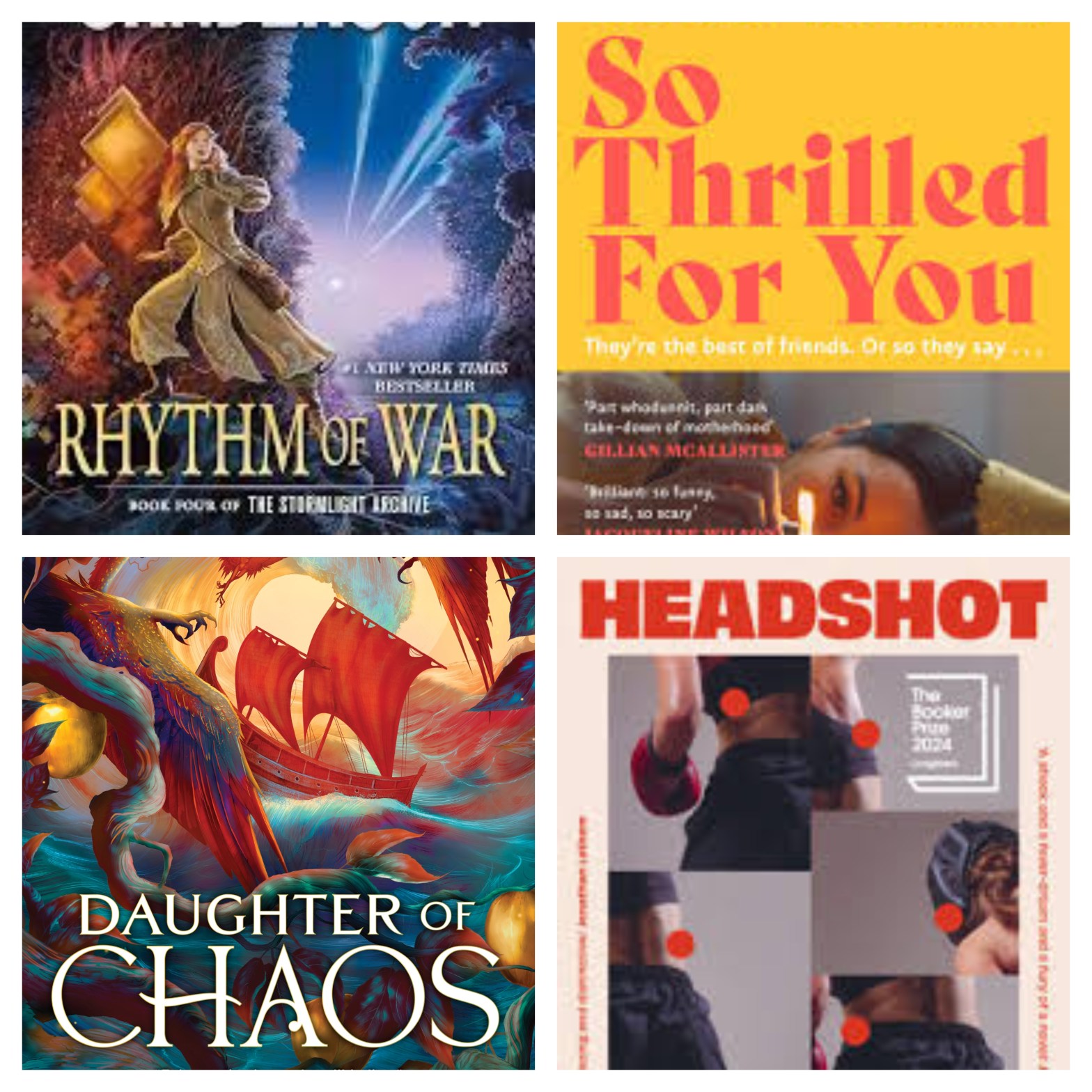
The Rhythm of War by Brandon Sanderson

My love affair with The Stormlight Archive continues and my feelings grow more ardent with each passing book. I love the way that Sanderson creates space for his heroes to grow in ways that are new and unexpected (i.e. everything about Kaladin’s arc in this book), while also giving characters who have traditionally been sidelined their time in the sun (hello Navani Kholin) and still managing to find time to add new characters who give us fresh perspectives and add further depth to an already rich and complex plot (I don’t think I’ll ever be over Raboniel). The other thing that’s mad about these books is just how vast they are. I mean, this one is over 1200 pages long so you would kind of expect a lot of action but even for a book of this size it feels like so much is happening it would honestly be more efficient for you to just read the series than for me to attempt to summarise it for you in a way that avoids spoilers. I also cannot let this review end without at least alluding to the moment in the book that made me the most emotional (and that is saying something because once again I was lying in bed audibly gasping every five minutes once I got to the last 200 or so pages. My husband was initially concerned and then wrote it off as Sanderson-induced mania). Adolin and Maya. What is more beautiful than the relationship between a man and the spirit of his dead super sword that he does morning stretches with? And if you think that sentence is crazy, then you need to read the book. Please read the book. Please.

So Thrilled For You by Holly Bourne

Thank you to Netgalley and Hodder & Stoughton for this ARC. Although I did have to be dragged kicking and screaming out of my latest streak of fantasy books, I can confirm that So Thrilled For You was just as compelling and thrilling as any tale of magic and warfare. One of the things I love about Bourne as an author is how sharp her pen can be. She is spectacular at dissecting social relationships and phenomena and turning them into incredibly compelling and unputdownable reads and So Thrilled For You is no exception. The novel centres around four friends who broadly embody the various models of thirties womanhood that we see in the media. Lauren is a new mother who is struggling more than any of her friends realise, Steffi is an ambitious career woman who is proudly child-free but convinced everyone is secretly judging her for it, Charlotte is desperate for motherhood and is channelling all of her OTT type A energy into throwing the ultimate Pinterest-worthy baby shower for Nicki, who is excited to have her baby but has half an eye looking to the past and the life she gave up to become a mother. This book had me crawling out of my skin with how toe-curlingly and casually cruel that these women could be to each other. The changing perspectives were superbly executed. Every interaction seemed perfectly innocent from the perspective of the person narrating it and was taken achingly personally by the friend who then perceived dozens of implicit slights. As much as each character was fantastically realised, Lauren takes home the prize for most unflinching depiction of motherhood and the postpartum experience that I have read in some time. The scenes from the hospital after she gave birth were so harrowing that I made my husband read them and promise that if we had children that he would never let this happen to me. Overall an excellent, highly readable novel that will keep you guessing and also really has something to say about female friendship and the way that society treats women of childbearing age. Highly recommend for fans of Big Little Lies or book clubs looking for a juicy discussion.

Daughter of Chaos by A.S. Webb

Thank you to NetGalley and to Penguin Random House for this ARC. There are very few things that get me going like Greek mythology-influenced fantasy and so I was delighted to get my hands on Daughter of Chaos. It centres around Danae, an ordinary young woman living simple life on the island of Naxos whose life is turned upside down when her sister is raped by a god. Confronted with the careless cruelty of the immortal beings who rule her life and plagued by strange visions, Danae is driven from her home to seek answers from the Oracle of Delphi. There she learns that there is one who is destined to end the tyranny of the Olympians and set mankind free from their endless demands for sacrifice but she’s as shocked as the rest of us to find out that it’s her. Accompanied by some of my favourite ancient heroes (and also least favourite, fuck you Jason), Danae sets out on a quest for the truth that lies at the heart of her world. This take on Greek mythology is very original and I really enjoyed the first third or so of the book. Webb has a real talent for driving forward the story in a compelling way and introducing creative but consistent twists to the original stories. However, my brain is a little bit broken by four years of studying Classics at university so once Heracles, Atalanta and Hylas were introduced I found it a bit easier to see those twists coming which I think ruined a little bit of the magic for me. However, I’m excited to see where this trilogy goes, especially given the ending – after all, what is a hero’s journey without a good old fashioned katabasis? Perfect for Greek mythology nerds, fantasy nerds and absolutely ideal for those who are lucky enough to be both.

Headshot by Rita Bullwinkel

I knew I had to read this book after the extremely enthusiastic woman who worked in my local bookstore basically shoved it into my bag while telling me it was the best book she read last year. I was not disappointed. Headshot is a short but punchy (see what I did there?) novel which takes place at America’s amateur women’s under-18 boxing championship, the Daughter’s of America Cup. Following each of the eight quarter finalists, each chapter tells the story of the startling physical and psychological competition that takes place between two of the girls. Some girls are more talented that others, some are hungrier for victory but all have something that has driven them to a level of athletic excellence that most people can only dream of. Watching these different young women fight against each other was so compelling, I devoured this book over the course of an afternoon. Visceral, vicious and vibrant, this book is a fabulous short read for anyone who is looking to be jolted bodily out of a reading slump.

My Month in Books: November and December 2024

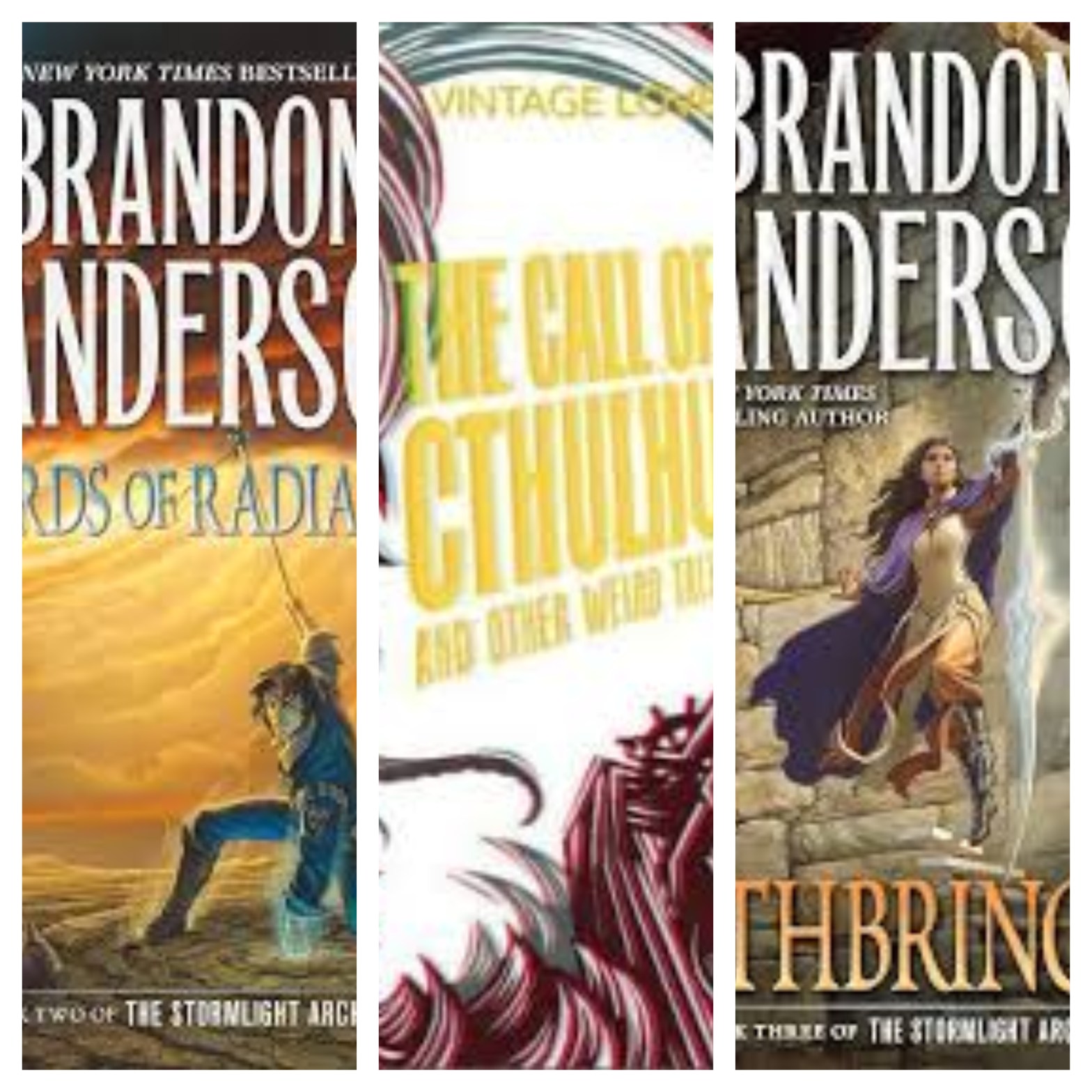
The Call of Cthulu and Other Weird Tales by H.P. Lovecraft

It says a lot about me that I was thrilled to receive this as a birthday gift and even more about my husband (and how well he knows me) that he got it for me. Lovecraft is an acquired taste but one that I definitely have. A pioneer of the horror genre, this compendium of short stories and novellas is a great introduction to his creepy extended universe of eldritch beings that lurk beneath the surface of the world as we know it. While the stories could get a bit repetitive (there are only so many ways that an unsuspecting academic can stumble upon brain-melting horrors beyond his wildest imaginings), there were still some real highlights in this collection that sent shivers down my spine. I particularly enjoyed The Whisperer in the Darkness, The Thing on the Doorstep and most of all, The Shadow Over Innsmouth. These all tend more towards the ‘creepy cults/aliens/wizards who live among us’ branch of Lovecraft’s work and I tend to find these significantly spookier than the ‘very very long description of hidden civilisation of eldritch beings without a tremendous amount of plot mixed in’ branch (looking at you At The Mountains of Madness and The Nameless City). One benefit to reading all of these stories back to back however is that it becomes easier to see the connections between them and understand the wider world that Lovecraft is constructing but I would still say that this is probably a collection you’ll enjoy more if you dip in and out of it. The novelty preserves a bit more of that Lovecraftian weirdness I find so compelling and helps to prevent the preponderance of flying tentacle monsters becoming passé.

Words of Radiance by Brandon Sanderson

I’m not normally the kind of person who reads a series back to back. Particularly when I find something I really enjoy, I like to take my time, savouring each book and relishing the series so it doesn’t end too quickly. However, it was rapidly becoming clear that such levels of self-control were not going to be possible with The Stormlight Archive. By the time I finally cracked and started Words of Radiance, the second book in the series, I was practically shaking from withdrawal and needed recharging like a dun sphere in a long drought between highstorms. Imagine my delight when the sequel not only lived up to the promise of the first book, but builds on all that made it great and surpasses it. After falling in love with Kaladin, Dalinar, Shallan and Adolin in the previous book, it was so incredibly satisfying to watch them come together (though not without some bumps along the way…) and start to become something even greater than the sum of their parts. And to be clear, those individual parts are awesome. It’s kind of amazing that after everyone having such a phenomenally epic individual arc in the first book that Sanderson keeps finding new and exciting ways for them to grow as characters and keep surprising the audience. And in amongst these beautiful and tender scenes of growth, healing and honour triumphing over chaos, you have truly some of the most absolutely fucking rad fight scenes I have ever read. I will never be over the duel. I was literally in bed yelling at the pages. I can only assume that this is how normal people feel watching sports. And the plot itself just grows richer and more complex and thornier to the point where if I even start trying to pull all of the different threads together into a summary I’ll basically have spoiled the whole thing. This book is truly everything and if you’re still not reading these then what are you even doing?

Oathbringer by Brandon Sanderson

So following my previous experience of withdrawal I decided to stop screwing around and just jump straight into Oathbringer and I am so glad I did. Once again Sanderson has raised the stakes of the conflict to new and epic heights in a way that feels earned but also adds additional layers of moral complexity that has you wrestling with all of the same demons as our heroes. All of my praise from previous books can also be applied here, from the incredible character work, to the intricate plot, the phenomenal wordbuilding and the incredible battle scenes but I need to spend the rest of this review just talking about Dalinar Kholin. To take a character as beloved as Dalinar and to really break him down and show the readers the darkest side of him in such an up close and personal way is such a powerful move from Sanderson. His entire arc in Oathbringer was so beautifully done and honestly hit me in an incredibly personal way. What I love so much about this series is the way that it speaks to both my head and my heart, a complex and rewarding story that leaves me punching the air and screaming incoherently for the last 200 pages or so. I am asking once again for you to start reading this series immediately because I need to talk to people about this without spoiling it for them. Please.

My Months in Books: August, September and October 2024

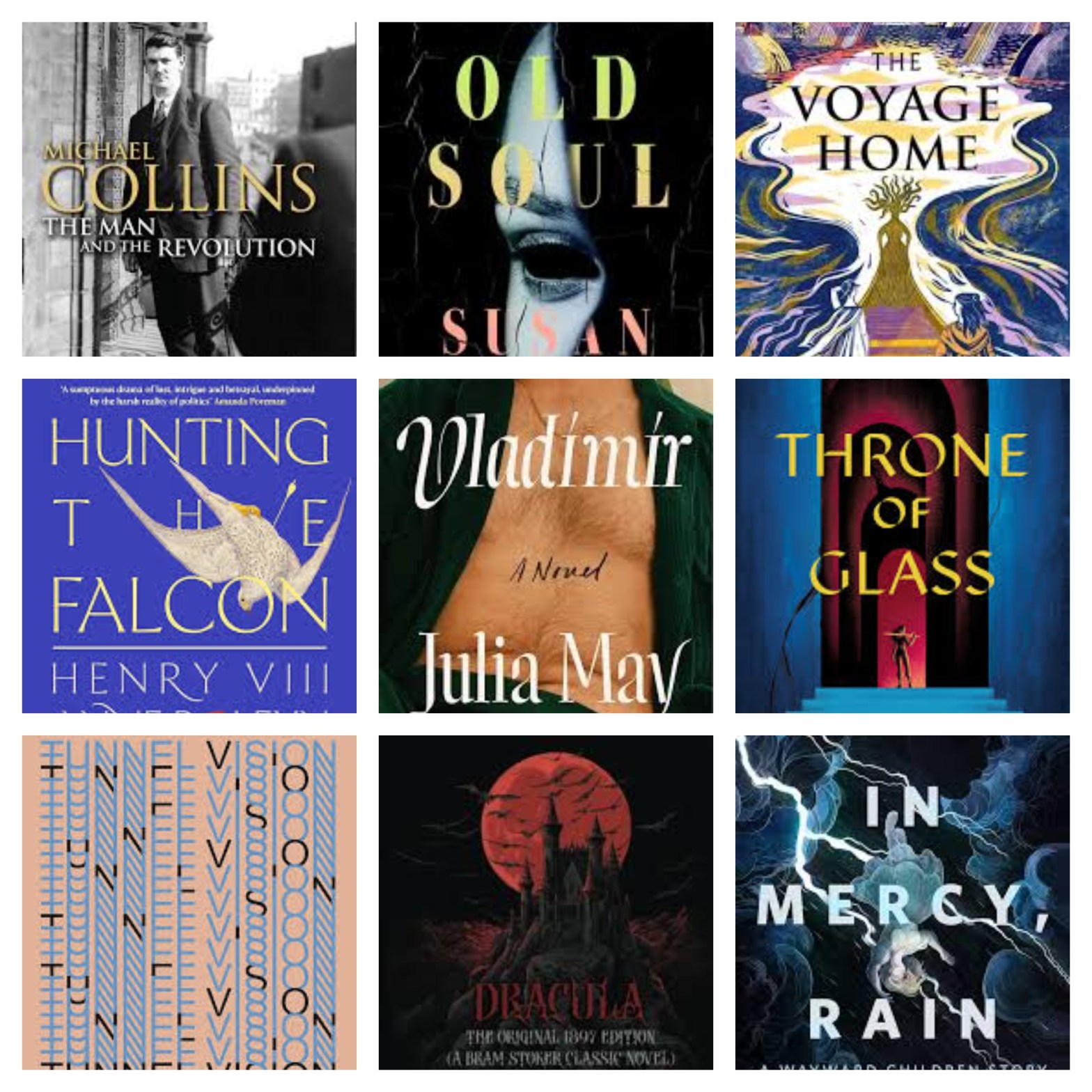
Michael Collins: The Man and the Revolution by Anne Dolan and William Murphy

There was recently a plaque but above a very bougie furniture shop in my neighbourhood, noting it as the site where Michael Collins was inducted into the Irish Republican Brotherhood in 1909. For those who didn’t come up through the Irish education system, Michael Collins may not be a familiar figure to you but he looms large in the national imagination. A key figure in the Irish fight for independence from Britain, Collins was a solider, a spymaster, a politician and a negotiator prior to his assassination at the age of 31 in the midst of the Irish Civil War. Seeing this little green sign pop up brought years of school history lessons rushing back and I was inspired to seek out a biography of the man, rather than just the myth and the legend. Dolan and Murphy’s comprehensive biography explicitly tries to address the power of Collins’ persona and brings together contemporary accounts of friends and enemies of Collins to demystify the character and qualities of the man he really was, rather than who he wanted to be perceived as. Eschewing a typical biographical approach, the book is arranged thematically rather than chronologically, with chapters focusing on Collins’ attitudes to work, war, politics and celebrity itself. If you’re looking for a good starting point to learn more about the Irish War of Independence and the Civil War, this book will likely be too advanced for you as it assumes a lot of existing knowledge of Irish history. However, if you’re already familiar with these topics and looking to dive deeper, this is a great book to pick up.

Old Soul by Susan Barker

Thank you to NetGalley and Penguin UK for this ARC. Old Soul is a supremely creepy and unsettling gothic novel which begs the question of how far someone might go to live forever. When Jake and Mariko both miss their flight in Osaka airport, they go for a drink and discover they have something very disturbing in common. Both of them have loved ones who died suddenly and in uncanny and eerily similar ways. In the days before their deaths, they seemed to be going mad and autopsies later revealed that all of their organs had flipped to the opposite side of their bodies. Even more strangely, in the days before their deaths both became close with a mysterious and alluring photographer who completely disappeared in the aftermath of their demises. Surely this can’t be a coincidence? Who is this woman and how is she connected to these deaths? This is what drives Jake to go down a rabbit hole of rumour and legend to unfurl a story that spans across continents and has been centuries in the making. This novel is twisty, spooky and has an absolutely mind-melting ending – a perfect read as the nights get longer.

The Voyage Home by Pat Barker

Thank you to NetGalley and Penguin UK for this ARC. The final book in Pat Barker’s spectacular Women of Troy series, The Voyage Home blends together the myths of Cassandra and Clytemnestra to tell a compelling story of the way that war and trauma echo throughout the lives of everyone it touches for years after the last spear has been laid down. Cassandra is a Trojan princess, cursed to see the future but never be believed. She is being brought back to Greece as a concubine for Agamemnon, a Greek general and the architect of all of her family’s despair. She is carrying his child and her only solace is her visions of Agamemnon’s imminent death. The fact that her death seems to be inextricably linked to his feels like a small price to pay to avenge her people. Meanwhile Agamemnon’s wife, Clytemnestra, waits in Mycenae, still nursing her rage after Agamemnon sacrificed their daughter to the gods for a fair wind to get them to Troy. After ten years of plotting her revenge, she’s ready to give Agamemnon exactly the homecoming he deserves. Barker has grounded these ancient myths in gritty, earthy and psychologically realistic narration, making these women feel alive and real and breathing new life into this ancient but still poignant story.

Vladimir by Julia May Jonas

Julia May Jonas definitely wins the award for wildest opening paragraph I’ve read this year and it definitely sets the tone for the story to come. Vladimir is, at its heart, an exploration of power, desire and consent told through the eyes of a respected albeit frustrated (in multiple senses of the word) English professor. Our narrator’s husband is currently under investigation by the small college where they both work for having multiple affairs with his students and although she has long been aware of and condoned her husband’s infidelity, this new scrutiny is forcing her to reckon her perceptions of her own life and relationship. Also forcing her to look at things from a new perspective is the arrival of Vladimir, a young, attractive and talented new hire in the English faculty. Although he’s married, he becomes an object of obsession and lust for our narrator and as her life spirals increasingly outside of her control, her actions towards Vladimir become increasingly and dangerously unhinged. Vladimir is a propulsive, darkly funny and intelligent novel that I have no doubt will prompt discussions at many a book club.

Hunting the Falcon: Henry VIII, Anne Boleyn and the Marriage That Shook Europe by John Guy and Julia Fox

One thing about me is that I will never get sick of reading about the Tudors in forensic detail, so imagine my delight when I stumbled upon this absolute doorstop of a book about the marriage of King Henry VIII and Anne Boleyn, which famously tore apart the Catholic church before ending in accusations of witchcraft and a brutal beheading. As much as I love all the courtly intrigue and soapy drama of the Tudor court, I loved how Guy and Fox went out of their way to situate Henry and Anne’s relationship in the context of the politics of sixteenth century Europe. The focus on Anne’s early female role models was really refreshing and the acknowledgement of her agency in both her rise and her downfall casts a new light on a frequently misunderstood and oversimplified historical figure. If you’re a fellow Tudor obsessive, don’t be intimidated by the size of this one – although it is weighty it is worth it!

Throne of Glass by Sarah J. Maas

Let it never be said that I’m not an optimist. Although I have never been able to hop aboard the Sarah J. Maas hype train I had managed to convince myself that maybe this time it would be different, I’d finally see what everyone else sees and would fall in love with these books. It was not to be. I wish I was the kind of person that could not take everything so seriously but every time I read one of her books I get so frustrated by the shallow world-building. My brain is like a toddler constantly asking ‘why?’ and none of the answers that are given are ever really satisfying. The book is definitely readable but I just can’t invest in a seven book series where the world of the story doesn’t at least feel partly fleshed out by the end of the first book.

Tunnel Vision by Kevin Breathnach

Somewhere between a memoir and critical essays on film, Tunnel Vision is an intimate and lyrically written account of a chaotic extended adolescence punctuated with crises of masculinity. While the writing itself is good I feel like you probably need to be a film connoisseur to really get the most out of it as the memoir sections weren’t really strong enough to stand on their own and often veered more closely to the self-indulgent than the incisive. This is one of those books where I know someone out there is going to be absolutely obsessed with it but that person is unfortunately not me.

Dracula by Bram Stoker

One thing that’s wild about reading Dracula for the first time in year of our Lord 2024 is thinking about how shook the people of the 1890s must have been by the big twist that Count Dracula is a vampire. So much of this story has woven itself into the public consciousness and popular mythology around vampires that it can be easy to forget how groundbreaking and mind-bending this book must have been when it first came out. A classic of the gothic horror genre, Dracula is a slow-burning and spectacularly spooky epistolary novel that is a must read for fans of the uncanny. Separately, Mina ‘I am the train fiend’ Harker has absolutely rocketed herself into the upper echelons of my list of favourite fictional characters and now I’m in desperate need of a film adaption that does her justice. If anyone has recommendations for any other books in which a woman defeats an unspeakable evil with the power of a proper filing system and encyclopaedic knowledge of train timetables, please let me know immediately.

In Mercy, Rain by Seanan McGuire

This is a bit of a deep cut for fans of Seanan McGuire’s Wayward Children series, which centres around the trauma and difficulty that children have in readjusting to mundane reality after having gone on magical adventures in other worlds. Jack Wolcott is a much-loved character in the main series whose hobbies of reanimating the dead and battling with her twin sister to keep her horror-inspired adopted homeland of the Moors (relatively) safe forms a key part of the plot of the main series. This novella is for those who want even more of Jack but also feel that she has suffered entirely enough and want to see her having a bit of a nice time. This is a brief but sweet flashback to the beginnings of Jack’s relationship with Alexis, a girl she encountered for the first time as she used the power of lightning to bring her back from the dead. Not essential for those who are fans of the series but a very pleasant bonus.

The Knife of Never Letting Go by Patrick Ness

This book was a total whirlwind. In a town where there are no women and all of the men are constantly able to hear each others’ thoughts, Todd is the only child left and he is desperate to become a man like the others. But everything changes when he finds something mysterious in the woods; a girl whose thoughts are completely hidden from him. This discovery sets off a chain of events which tears Todd’s world apart and challenges everything that he believes to be true. But with a horde of hostile men after them, Todd, the girl and Todd’s loyal dog Manchee don’t have much time to stop and think as they confront a world as alien and unexpected to them as it is to the readers. The Knife of Never Letting Go manages to blend engaging sci-fi world-building with heart-pounding action and real emotional heft. Though this book is targeted at younger readers (and I think would make a great gift for any young lovers of action movies who you’re trying to persuade of the benefits of reading), I think that this has plenty of resonance for readers of all ages. Having said that, I found all of the relentless danger honestly a bit too stressful for me as a reader and so I’m not yet sure that I’ll pursue the series but don’t let my fragile nerves stop you from picking this up if you’re made of stronger stuff!

The Book of Forgotten Witches: Dark & Twisted Folklore and Stories from Around the World by Balázs Tátrai and Lilla Bölecz

Thank you so much to NetGalley and to Watkins Publishing for this ARC. The Book of Forgotten Witches is a gorgeously illustrated compendium of of witchy and eerie tales from across the world with tales of curse-bringers, shapeshifters and fate-turners all bound together with explanations of the Major Arcana of the tarot and alchemy. Each chapter also features original stories which interrogate and examine different aspects of what it means to be a witch and how society views outsiders. If you’re looking for a Christmas gift for the witchy person in your life, this book is one that will enlighten and delight.

Broken Homes by Ben Aaronovitch

London’s premiere magical copper is back and this time he’s being forced to go south of the river. When the suicide of a town planner starts to look as if it has a touch of the uncanny about it, PC Peter Grant is pulled inexorably towards a mysterious housing estate in Elephant and Castle which seems to have been built with magic in mind. Accompanied by Nightingale, Leslie and, of course, Toby the magic-sniffing dog, Peter must get to the bottom of what’s going on at this estate and what it has to do with the Faceless Man, who has been wreaking magical havoc through London. Sometimes a series like this can become repetitive as the good guys chase down endless baddies and find themselves in predictable scrapes but this is not a trap that Rivers of London is in any danger of falling into. The final twists left me gasping and it’s clear that Aaronovitch’s vision for this series is expansive and beautifully constructed. As ever, Aaronovitch’s love for London also shines through every word on the page as he imbues the city with with just enough grimy sparkle to bring its inherent magic to life for a fantasy audience. If you haven’t already started this series, I don’t know what more to tell you, just go read it. You won’t be disappointed.

Gideon the Ninth by Tamsyn Muir

Enemies to allies to friends to lovers necromatic space lesbians. I don’t know what else to tell you. For those of you for whom that is somehow not enough of an incentive to pick up this book, 1.) Why are we even friends? 2.) Fine, I’ll write a proper review. In Gideon the Ninth Tamsyn Muir has crafted a world which feels truly unique. Set in a galactic empire overseen by the Necrolord Prime and his immortal Lyctors, the magic of the dead is the currency of power. Each of the nine planets has its own special brand of death magic and a corresponding ruling House. The Houses are constantly competing for advantage and political power, so when the Emperor announces that he is in need of more Lyctors and invites the heirs of each House to compete for the chance to ascend, everyone is prepared to bring their A-game. Except that is, for the oft-forgotten and little understood Ninth House, a gloomy death cult on the edge of the galaxy that specialises in bone magic. For although their heir, Harrowhark Nonagesimus, is a prodigious necromancer, she cannot ascend without a cavalier, a sworn sword, to accompany and fight for her as a champion. After a tragic incident which annihilated much of the Ninth House’s young, their only real choice of cavalier is Gideon Nav, a foul-mouthed, snarky but gifted swordswoman who is indentured to the Ninth House, has serious problems with authority and absolutely despises Harrowhark Nonagesimus (don’t worry, the feeling is mutual). With the fate of the Ninth House at stake, Harrowhark offers Gideon her freedom in exchange for her help in becoming a Lyctor but neither woman has any idea of the magnitude of the challenges they will be facing down. This story is part locked room mystery, part logic puzzle, part Lovecraftian gothic horrorshow, part meme and all two tortured souls coming together through acts of radical forgiveness and love. Cannot recommend enough.

Intermezzo by Sally Rooney

I, along with every other woman who likes books between the ages of 25 and 45, was very excited to get my hands on Intermezzo, the latest novel by the literary sensation that is Sally Rooney. As with her previous work, Intermezzo centres around complex relationships between a set of sad Irish people, in this case Peter and Ivan, two brothers who are mourning the death of their father, and the women in their lives. On the one hand we have Peter, a successful lawyer in his thirties caught between two very different women, Sylvia, his first love and best friend with whom he is unable to have a physical relationship, and Naomi, an acerbic college student who awakens his protective and providing instincts. Meanwhile Ivan is an awkward professional chess player in his early twenties who finds himself smitten with an older recent divorcee, Margaret. However, as much time is spent unravelling the complex social dynamics and expectations of the various romantic relationships in this novel, the real core is the relationship between the two brothers, the difficulties of the sibling relationship and the agonies of expectation that can get in the way of reaching out and building human connection with someone you love. I’ve since spoken to a few people who found the book disappointing, finding it hard to digest and saying it wasn’t as good as Normal People. I have a tip for this but I’m afraid it’s not necessarily the most practical. I had the delight of reading this book on holiday and I think Intermezzo really benefits from long periods of uninterrupted reading, letting you sink into the minds, worlds and loves of Peter and Ivan. This isn’t always the easiest thing to do in a world where all too often moments for reading have to be snatched on commutes or in the moments before your eyes drift shut at bedtime but if you can set the time aside, you’ll be well rewarded.

The Ministry of Time by Kaliane Bradley

On the surface, The Ministry of Time can sound like a bit of a silly book. I mean, a young civil servant falling in love with a Victorian naval commander after she’s assigned to work on a top secret time travel project does feel like an inherently unserious sort of scenario. Don’t worry if that’s your kind of thing by the way because there is plenty of comedy and cuteness to be found as Commander Gore adjusts to the twenty-first century and comes to terms with novel concepts such as indoor plumbing, Spotify and the collapse of the British Empire. However, as the true implications of the Ministry’s project come to light, this book does take an altogether more interesting and complex turn, asking questions about colonialism, free will and what we owe to the future and the past. Kaliane Bradley has managed to construct an original and highly readable sci-fi romance while compromising on none of the best qualities of either genre. Come for the quirky romance, stay for the brain-melting navigation of the ethics of time travel.

The Way of Kings by Brandon Sanderson

Have you been hearing everyone talking about how The Stormlight Archive is a modern classic within the fantasy genre and is as close to the platonic ideal of an epic saga as it is possible to achieve but for some reason you still haven’t read it? Please let me have the honour of being the one to push you to finally take the plunge. Everything they say is true and then some. If this is the first you’re hearing of The Stormlight Archive , lucky you! Get reading now. Yes I know it’s a thousand pages long. Yes I know the world-building is complicated. Yes I know a new fantasy series feels like such a big commitment. Grow the fuck up and read the goddamn book. Do you think good things just happen to people? Of course not, you have to work for them. Read the goddamn book. Epic in scope and scale, The Way of Kings is the first of a quintet of books which takes place in the land of Roshar, a world rocked by devastating storms where powerful warriors wield weapons that give them near godlike abilities. Our story focuses on three very different people: Dalinar Kholin, an infamous general troubled by strange visions of the distant past, Kaladin Stormblessed, an apprentice surgeon turned soldier turned slave fighting seemingly impossible odds to protect those he loves, and Shallan Davar, a ferociously intelligent young woman determined to save her fractured family from ruin by any means necessary. Although it may appear that these three have nothing in common, something more powerful than they can imagine will draw them together and kickstart a saga that will change their world as they know it. Trust me, read it and remember: life before death, strength before weakness, journey before destination.

What My Bones Know: A Memoir of Healing from Complex Trauma by Stephanie Foo

By any objective metric, Stephanie Foo is a success. A popular and well-liked award-winning radio producer with a loving boyfriend to boot, you’d assume that she’s on top of the world. But every day behind closed doors Foo was dealing with the ramifications of a profoundly abusive childhood that left her scarred mentally and physically. When she is eventually diagnosed with complex post-traumatic stress disorder (or CPTSD), she’s at first terrified by the lack of literature and resources available for people like her. But rather than surrendering, she does what any great journalist would do: She asks questions. Interviewing scientists and former teachers, trying innovative new therapies and reading widely about the impact of trauma over generations and in immigrant communities, Foo has pulled together the resource that she herself probably needed at the outset of her diagnosis. What My Bones Know is a harrowing but ultimately hopeful story of one woman’s struggle to confront and come to terms with her trauma and whether you have CPTSD or not you will walk away from this book wiser.

My Month in Books: June and July 2024

Say Nothing: A True Story of Murder and Memory in Northern Ireland by Patrick Radden Keefe

Sometimes it takes seeing something written out in black and white to fully to fully comprehend its magnitude. Growing up in Ireland, the names Jean McConville and Gerry Adams have always been known to me and I even studied the Troubles in school as part of my Leaving Cert exams but there’s something very different about reading a sanitised version of history in a school textbook and actually reading first person accounts of those who suffered under and conducted acts of terror. For those less familiar with the history of Northern Ireland, Jean McConville was a single mother of ten children who was disappeared by the IRA, who accused her of acting as an informant for the British Army. Although many members of their close-knit community were involved either actively or passively in her abduction, her children went decades without any closure. It is this episode that Radden Keefe uses as a starting point for discussing the sectarian violence that rocked Northern Ireland for years and how ordinary citizens became radicalised and how they justified committing atrocities against innocents under the guise of a war. Going beyond the peace process, Radden Keefe also focuses on the silence and bitterness that still pervades Northern Ireland today over the events of the Troubles and the echoes of trauma that will likely never be resolved. If you want a history book that is both engrossing and meticulously researched that still provides you with a real insight into humanity in extremis, this is a great read.

The Familiar by Leigh Bardugo

Leigh Bardugo is one of the author’s whose books I buy without generally even needing to read the blurb, but if I had needed persuading this plot feels designed in a lab to grab my attention. It centres around Luzia, a scullery maid toiling away in fifteenth century Madrid, who is concealing a couple of very dangerous secrets. The first is that she has the ability to do magic and has a tendency to use her ‘little miracles’ to cut herself a lucky break in a world where the sun always seems to shine on someone else. The second is that her magic stems from her Jewish faith and the Ladino phrases passed down from her aunt. If the Inquisition were to get wind of either of these things, let alone both, she’d be headed straight to a fiery death on a stake. When her social-climbing mistress starts forcing her to use her powers to entertain dinner guests, Luzia starts attracting entirely too much attention from the powerful men of Spain. If she is to survive she will need rely on her wits, her strength and a mysterious magical being known as Santangel who says he wishes to help her but may prove her undoing. A lush and gorgeous historical fantasy that manages to feel both gritty and like a fable about the dangers of bargains, Bardugo will be remaining firmly on my list of authors whose grocery lists I would happily read.

Severance by Ling Ma

While you were working during the COVID-19 pandemic were you ever seized by the eerie feeling that you were like one of the members of the band on the Titantic who continued to play even though the ship was sinking? That you were going through the motions of normalcy in the absence of feeling like you could do anything else? Then you’ll relate to Severance’s protagonist, Candace Chen. As a deadly plague rips through New York City, Candace just keeps on keeping on, heading to her office job, emailing clients and taking pictures of the increasingly ghostly city on her increasingly fraught commute. But even she can’t keep calm and carry on forever and when she links up with a group of survivors and their forceful leader, Bob, Candace needs to think carefully about what it is she really wants and decide whether she is ready to strike out on her own terms. I checked and double checked when this book was written because I couldn’t get my head around that it came out a full two years before the pandemic. I am so glad I didn’t read it during lockdown because I honestly think it would have freaked me out too much but now, with a bit of hindsight, I can appreciate it for the brutal satire of workplace culture and modern malaise that it is. 

Queer as Folklore by Sacha Coward

Thank you to NetGalley and Sacha Coward for providing me with an ARC of this book, it was the perfect pride month read. You may have observed that whenever queer people gather in large groups, a preponderance of mythological imagery often follows – be it fairy wings, unicorn horns or mermaid tails. But why is this? What draws the LGBTQ+ community to folkloric imagery? Coward posits that this is not a modern phenomenon but rather that the origins of these stories are themselves inherently queer, in that they deal largely with outsiders, those who exist between two worlds or who have to conceal a part of their identity, but are ultimately imbued with magical or divine auras. Coward takes the reader on a fascinating jaunt through world folklore, from ancient Greece to the modern Marvel blockbuster, and demonstrates the queer origins of so many symbols of magic and power that we know today. Any LGBTQ+ person looking to remind themselves of how inherently magical they are just for being here as well as any fellow mythology nerds should absolutely pick up this book.

Skeleton Song by Seanan McGuire

Skeleton Song is a novella set in the universe of Seanan McGuire’s Wayward Children series, which focuses on the inhabitants of a special boarding school which aims to help children who have travelled to magical worlds readjust to returning to their old lives once their adventures have come to an end. Our protagonist here is Christopher, a young man with inoperable bone cancer who finds both a cure and true love in Mariposa, a world of singing, painted skeletons. Although his fleshiness makes him a freak in their world, Christopher has never felt more at home than he has by the side of the Skeleton Girl, the princess of Mariposa whom he loves passionately. But before they can be wed and Christopher can become a true denizen of Mariposa, he has to be absolutely sure, and magical worlds can be very unforgiving indeed to those who carry doubt in their heart. This was a gorgeous prequel to the main series though I really hope it doesn’t mean we won’t get a full book dedicated to Christopher as he hopefully finds his way back to his Skeleton Girl. 

Annihilation by Jeff Vandermeer

A biologist, a psychologist, a surveyor and an anthropologist walk into an isolated and mysterious environment from which no other scientists have ever returned quite the same, if they even return at all. This is not the start of a joke but rather the eerie premise of Annihilation. It’s very difficult to describe what happens in this book due to my fear of revealing spoilers and also because even now I’m still not 100% sure what I just read but suffice to say if you like a bamboozling and tense mindfuck of a novel, you will probably enjoy Annihilation. However, if you like your atmospheric and weird reads to come with at least a dash of closure, this may be one for you to skip!

Nights at the Circus by Angela Carter

I’ve always loved Angela Carter’s short stories so I was super excited to sink my teeth into one of her full-length novels. If you’re a fan of her book of fairy tales or The Bloody Chamber then I think Nights at the Circus is probably also right up your alley. It centres around Sophie Fevvers, a cockney girl with a heart of gold just trying to make her way in the world and who just happens to have wings. Left on the doorstep of a highly progressive brothel as an infant, Sophie goes from living Cupid statue to star attraction at Madame Schreck’s sinister freak show cum bordello to narrowly avoiding becoming a sacrificial offering in a mad wizard’s attempt to attain immortality. When we meet her she is the toast of Europe, having joined the circus and become the world’s most famous aerialiste, and is relating the story of her early life to a sceptical American journalist. Finding himself utterly in love with her, he throws in his lot with the circus and becomes a clown in order to follow her to Moscow and eventually the wilds of Siberia. Although this is a full-length novel, there’s still much of the short story about this book. Carter has crafted a captivating and eccentric cast of characters, each of whom provides an opportunity for Carter to give us an insight into their background. Carter rarely passes up these opportunities but far from making the novel feel disjointed it creates a riotous and rich tapestry of a world that the reader can get lost in. Earthy, messy and sensual, gothic and whimsical in equal parts, I loved this book and think it’s a must read for Carter fans.

The Bee Sting by Paul Murray

The Bee Sting is a story about a family in crisis. After the 2008 financial crash, the Barnes family’s once lucrative car dealership is haemorrhaging money and the strain is causing the already fragile threads holding them together to fray and snap. To a certain extent, every member of the Barnes family is living a lie and is carrying the legacy of copious generational trauma, but the most darkly funny element of this book is how isolated they all are in their own heads, completely immersed in their own issues and blissfully ignorant of the ways in which the people that they should be closest to are also just inches from breaking down. You nearly want to scream at them to just talk to each other and be honest about what’s really going on, but then I remember that this is a story about an Irish family and therefore revert to mentally praising Murray for his realism. Murray gradually unspools a tragedy generations in the making in a way that feels tantalisingly avoidable and yet fated. A magnificent and engrossing character study that will have you simultaneously rooting for the Barneses to get their shit together while also wanting to shake them.

The Epic of Gilgamesh by Unknown

There is something kind of magical about reading a story that’s over four thousand years old. As you’re reading it you can almost hear the ghosts of the millions of people spanning across time and continents who have read and loved it before you. The Epic of Gilgamesh originates in ancient Mesopotamia and is one of the very oldest stories that the human race has. It does not survive intact and my copy leaves ellipses so that the reader can see where certain lines and episodes have been lost to history. However what still survives is more than sufficient to form a story. Our hero is Gilgamesh, a king of Uruk, who is so powerful and superlative that he cannot help but cause havoc in his city. Taking pity on the people of Uruk, the gods create a foil for Gilgamesh, a wild man of the forest named Enkidu. Gilgamesh and Enkidu become inseparable and go on a number of heroic adventures but the story becomes really interesting in its latter half after Enkidu is killed. Gilgamesh is devastated by the loss of his friend and so travels to the very edges of the earth to understand the secret of eternal life. Forced to reckon with the inevitability of death, the story ends with a wiser Gilgamesh returning to Uruk to rule better than he did before. Although this is an unfathomably old story, so much of Gilgamesh’s journey still feels relevant today and its echoes can be seen everywhere from my favourite Greek epics like the Iliad and the Odyssey to modern Marvel superheroes. The text itself can be tough going to those who aren’t used to ancient epic but it’s an incredibly special read that gives a glimpse into the beginning of humanity’s very beginnings.

Unshrinking: How to Fight Fatphobia by Kate Manne

Every now and again you read a book that manages to totally rewire your brain chemistry and, in my experience, those books are usually written by Kate Manne. Manne is a professor of moral philosophy and I imagine she must be a great teacher because she has an incredible talent for taking complex social phenomena and analysing them clearly and accessibly for the average reader. Previously her work has centred around sexism, misogyny and male entitlement, but on this occasion she has turned her attention to the persistent discrimination faced by fat people in our society. Manne deftly demonstrates the systemic nature of fatphobia in her opening chapters but she really gets cooking towards the end of the book when she asks the question of whether or not fat people have a moral obligation to try to lose weight. Her razor sharp annihilation of this way of thinking and her notion of ‘body reflexivity’, which is the idea that your body exists for you and you alone, has really changed the way that I think about and relate to my body. But make no mistake, this is not a book preaching self-love but one that makes an incredibly persuasive case for a radical overhaul of the way our society thinks about and treats fat people. Would that every social movement had a champion as doughty and intelligent as Kate Manne to champion it!

Lady Susan by Jane Austen

Lady Susan was written when Austen was only in her teens and was published posthumously . This is probably Austen’s least known work which is such a shame because it’s one of her funniest and most subversive. It centres around the vivacious and capricious Lady Susan and if you’re used to your Austen heroines being clever young women with hearts of gold, you may be in for a shock! Lady Susan is freshly widowed but this does not stop her from being single and ready to mingle. In possession of that sort of shallow charm that leaves men dumbstruck and that women can see through in an instant, Susan causes absolute chaos in every home she visits, enchanting young, single heirs and married patriarchs alike. Amongst all this she is also determined to marry off her daughter Frederica seemingly to the most unpleasant man that she can lay her hands on and sully the reputations of everyone within a mile of her location. Lady Susan is a terrible person but more than anything she is terribly entertaining and if you’re the kind of person who’s watching Bridgerton for the Lady Whistledown drama rather than for the love story than this is going to be your favourite Austen book!

The Two Towers by J.R.R. Tolkien

Very few things give me a greater sense of peace than sitting down and reading about my favourite hobbits and their quest to save the world from darkness. No matter what is going on in my life, I can always at least fall back on the fact that I’m not having to trudge through the Dead Marshes to almost certain death (my version of ‘If Britney can survive 2007, you can survive today’). Something about the relentless but hard-won optimism of the story, the way that in spite of all of the difficulties the heroes keep trudging on and believing in the light at the end of the tunnel, the way that even when things seem impossible they choose to go down fighting, really resounds within my soul. It may not be edgy or seem particularly cool when it stands next to some of the more recent favourites of the fantasy genre but this is truly one of the ‘tales that really matter’ and I know I’ll keep coming back to it again and again as I get older.

Emily Wilde’s Map of the Otherlands by Heather Fawcett

Another feel-good fantasy sequel though unfortunately I can’t say I enjoyed this one as much as I enjoyed its predecessor. The cosy, light academia vibes still abound which makes this a perfectly charming comfort read however the plot was less tightly structured than the first book in the series, sometimes leaving me feeling as if we were wandering as aimlessly as Danielle de Grey herself. Some of the newer characters felt a bit shoehorned in as means to allow Emily to continue to show her emotional stuntedness/growth but didn’t quite feel like fully realised people with desires and motivations of their own (*cough* Ariadne *cough*) but it’s possible there’s more to come from them in future books. I also found the climax of the novel in which Emily finally accesses the Otherlands to be a bit…anticlimactic. I felt like I blinked and it was over and frankly after all of the build up around Wendell’s stepmother I was expecting her to be a bit tougher! Unfortunately I think this has a bit of a case of ‘middle book syndrome’ wherein the author needs to progress the plot from the first book which introduced us to the characters and the world we all know and love while still leaving scope for the main climax and resolution of the plot in a book that is yet to come. It’s a tricky balance to make this bridge compelling and while Fawcett does a good job, unfortunately this sequel doesn’t quite live up to the promise of the original for me.

My Month in Books: May 2024

In The Country of Others by Leïla Slimani

In The Country of Others is a lyrical and character-driven historical fiction novel, loosely based on the life of Slimani’s grandmother. During World War II, Mathilde, a passionate and rebellious Frenchwoman, falls head over heels for Amine, a dashing Moroccan soldier who is serving in the French army. When the war ends, the young lovers marry and move to Morocco where tries to make a success of the rocky and isolated family farm. As the rush of their romance dies down, Mathilde finds herself increasingly isolated, frustrated by the inhospitable climate and the tensions caused by her status as a foreign woman married to a local man. Equally Amine finds himself frustrated by her lack of understanding of his culture, her unwillingness to be a traditional Moroccan wife and the disdain that those of her culture shows him. as tensions begin to flare during Morocco’s battle for independence from France, this family finds itself caught in the crossfire, held apart for their foreignness but equally striving for their own independence and a brighter future of the country that they have chosen. This is a fascinating novel that shines a light on an area of history I knew little about, capturing the sweltering heat of Morocco, the passion of the independence movement and the crushing isolation of fighting to make a life in a space that does not welcome you.

Mrs Dalloway by Virginia Woolf

On the surface, Mrs Dalloway sounds like a pretty straightforward, even potentially dull, novel about a middle-aged socialite planning yet another party. The genius of Woolf is the way that she reminds us how even the seemingly-carefree society woman buying fresh flowers is carrying a huge, complex human story with around with her. Told in a stream of consciousness, Woolf not only cracks open the titular Clarissa Dalloway’s psyche, dwelling on her past loves, choices and dramas as she dwells on their impact and what they will mean for the rest of her life, but she uses Dalloway as a gateway into a host of other characters whose path she crosses on this fateful day. From the fragile and shell-shocked Septimus Smith, to the rejected and emotional Peter Walsh, to the spiky and embittered Doris Kilman, Woolf fluidly weaves together these lives into one unifying narrative that weaves together moments of heartbreaking isolation with biting critiques of the repressive nature British upper classes and depictions of PTSD and mental health that are decades ahead of their time. Don’t be fooled by the length of the book, although it is slender, there is some weighty material within.

Funny Story by Emily Henry

I’m not generally a fan of romance novels (in the conventional sense of the term) but Emily Henry’s are a significant exception to that rule. I think the reason for this is because her stories tend to focus on characters who wouldn’t usually be at the centre of a love story and Funny Story is a great example of this. The novel opens with Peter calling off his wedding and running away with his childhood best friend Petra, the girl who has always been there for him. But Peter and Petra are not the heroes of this story. Instead we’re focused on Daphne, Peter’s jilted ex-fiancee who moved to his hometown ahead of the wedding, and Miles, Petra’s scruffy ex-boyfriend who no one ever thought was good enough for her. Finding themselves unceremoniously tossed to the side, casualties of Peter and Petra’s epic love story, Daphne and Miles find themselves unlikely roommates as they try to recover from heartbreak and get their lives back on track. But when they receive invitations to Peter and Petra’s wedding after a night of drowning their sorrows in red wine, Daphne and Miles decide that the best way to screw with their exes is to attend their wedding as a couple. Naturally it doesn’t take long for the lines between what is fake and what is real to become somewhat blurry but as wacky as the premise is, Henry’s stories are always grounded in a strong emotional reality that will have even hard-hearted cynics rooting for a happy ending.

I Who Have Never Known Men by Jacqueline Harpman

I Who Have Never Known Men is a strange little book that leaves you with more questions than answers. If you can make peace with that, you’ll find something really special though I can see why others might find it maddening. It centres around an unnamed protagonist who has been raised in captivity alongside 39 other women. She is the only prisoner to have no memory of her life in the outside world and for her never seeing the sun or being held by another person are simply facts of life. When the planets align and the women are faced with a chance for escape, she emerges from the darkness into an alien world and must find who she is when the restraints are removed. Fundamentally this is a story that digs deep into what it means to be human, even if all of the markers of humanity have been stripped from you. Achingly bleak and haunting while still, against all odds, hopeful. I will be thinking about this book for a long, long time to come.

The Hero of Ages by Brandon Sanderson

If you have been wanting to get into Brandon Sanderson but don’t know where to start and find the idea of the Cosmere a little intimidating, stop what you are doing immediately and pick up the Mistborn series. Seriously. Go do it now, read a couple of chapters, then come back and finish reading this review. I’ll wait. The Hero of Ages is a perfect combination of technical mastery of storytelling and emotional mastery of character work. Every single new piece of information revealed slotted into place like a beautiful puzzle piece and every plot twist had me kicking myself, asking how I didn’t realise earlier. This is truly a story which has been woven with the care and attention to detail that you only see in true works of art and my mind truly boggles as to how Sanderson has crafted something so stunning and it’s allegedly not even his best work. Truly mind-blowing if true. But what takes it to a whole other level for me is how many emotions were wrung out of me by the incredible character work. Vin, Elend, Spook and Sazed (oh god, Sazed) truly have some of my favourite character arcs in fiction. It’s so beautiful and I will never be normal about this. It’s perfect, I don’t know what else to tell you, go read it.

Washes, Prays by Noor Naga

Washes, Prays is a slender but remarkable novel in verse, meaning the story is conveyed in a much more lyrical and abstract way than some readers might be used to. It tells the story of Coocoo, a young and devout Muslim woman living in Toronto, who finds herself heartbreakingly lonely although she has the steadfast companionship of her best friend Nouf, because she is living a life devoid of romantic love. Feeling as though she has been forgotten by god, she is all too vulnerable to falling madly and hopelessly in love with the first man to make her feel special. The catch? He’s already married. But how can a love that feels so holy be a sin? And how can Coocoo call herself a woman of faith as she wilfully sins again and again? And what happens when you cut yourself off from all the keeps you grounded for the sake of a love that is doomed to fail? These are the questions that Naga toys with over the course of this brief but impactful novel, channeling Coocoo’s disorientated and chaotic feelings through the passion of her poetry. If you like your novels a little more grounded in prose, this might not be for you but if you’re a poetry lover who’s maybe nursing a broken heart you should absolutely check this out.

Girl Meets Boy by Ali Smith

Fun fact: I wrote my undergraduate dissertation on queer women in Imperial Roman literature after being inspired by the story of Iphis and Ianthe the first time I read Ovid’s Metamorphoses. For those not familiar with this mythological deep cut, Iphis is a young woman raised as a boy by her family and her true sex is kept a secret. She falls in love with her best friend Ianthe and the two of them are set to marry, but the night before the wedding Iphis has a huge panic about not being able to sexually satisfy her bride-to-be due to her lack of penis. The gods decide to solve this problem by transforming Iphis into a man, with all of the attendant parts. Iphis and Ianthe are then married and live happily ever after. On the one hand, I loved this myth because it’s so unusual to get a happy ending anywhere in Metamorphoses and to get one in a queer love story felt downright amazing. But on the other hand, the ending completely erases the queerness of the story due to the fact that male authors in Ancient Rome seemed to struggle to imagine how two women might satisfy each other. Enter Ali Smith as a sort of dea ex machina to modernise the story and embrace all of the queerness, gender fuckery and sexual fluidity that makes the original so captivating. The is a beautiful novella about resistance, rebellion and transformation in a way that honours Ovid’s earlier work while creating something entirely new. Whether you’re a Latin nerd or just looking for some excellent Pride Month reading, you cannot go wrong with Girls Meets Boy.

Pride and Perjury by Alice McVeigh

Thank you to Warleigh Hall Press and Netgalley for an ARC of this book. I’m always a sucker for Austen variations and Pride and Perjury did not disappoint. This is a collection of twelve short stories, largely set within the extended world of Pride and Prejudice but also featuring further glimpses into the characters of Emma, Love and Friendship and Northanger Abbey. McVeigh’s writing style feels very in tune with the original novels and her stories therefore feel like very plausible extensions to these well-loved plots. So if you’ve ever wondered how the elopement between Lydia and Mr Wickham really went down, how Mr Elton persuaded Miss Hawkins to marry him so quickly after Emma rejected him and what was going through Lady Catherine de Bourgh’s head when she burst into Longbourne to try to get Elizabeth Bennet away from her nephew, then this is the collection for you.

My Month in Books: April 2024

A Promised Land by Barack Obama

When I was a little girl Barack Obama came to Dublin and my mum took me and my little brother to hear him speak. Even then, it was impossible not to realise that you were listening to a master of storytelling, though he had only used his skills to win elections at that point. In A Promised Land he instead uses his talents to tell one of the biggest stories that you can imagine: What it means to run for and win the presidency of the United States of America and what happens when you try to bring to fruition the promises and ideals of your campaign. Obama touches on huge, global issues like the 2008 financial crash and the Arab Spring as well as American domestic issues like healthcare reform. While any of these topics might seem dry or overly wonky in the hands of a less skilled storyteller, Obama brings each issue to life by displaying his clear passion and belief in the power of good policy making. There’s plenty of behind-the-scenes political wheeling and dealing for those who are looking for drama but for me I was really gripped by machine of policy development and legislative strategy that Obama deftly brings to life (though I acknowledge that I am weird and this is definitely a case of me bringing work home with me). Equally impactful though are the little humane stories scattered throughout the book of individuals working hard and doing their best to make it in America and Obama does a beautiful job of honouring their stories and bringing them to life. His clear love for his family also shines through every word he writes about them and I will go to my grave swearing that Barack and Michelle Obama are relationship goals. Ultimately this is a book about the huge difference that small actions can make, whether they are for good or for ill, and as cynical as I can be about politics I am forced to admit that this book actually made me feel a little warm and fuzzy inside. An engrossing and optimistic tonic for what promises to be quite the election cycle across the pond.

A Crane Among Wolves by June Hur

I love it when historical fiction teaches me about something I previously had no clue about and until recently the Joseon Dynasty very much came under that category. A Crane Among Wolves tells the story of a bloody chapter in the history of Korea in which the tyrannical King Yeonsan had a nasty penchant for commandeering huge tracts of land as his personal hunting grounds, burning books and banning literacy and stealing thousands of women from their families to become his personal courtesans. Iseul is the sister of one such unfortunate woman and she is determined to rescue her sister at all costs. Although she has lived a sheltered and privileged life, Iseul has nothing left to lose and is ready to stand on her own to feet to fight for what remains of her family. Along the way she receives help from a series of unusual characters including a gregarious innkeeper, a mysterious private investigator and the seemingly cruel and callous Prince Daehyun, half-brother to King Yeonsan. But there is more to Daehyun than meets the eye and when Iseul learns that he has been secretly plotting to overthrow his tyrannical brother, she throws her lot in with his and leverages what’s left of her family connections to move the heavens and bring the king down. But with so much at stake and with so much mutual trauma, can Daehyun and Iseul come together over more than just their mutual desire for revenge? And is it even possible to build a better world than the one they’re living in? A propulsive novel that will have your heart-pounding and your hands flipping pages while still teaching you about a lesser known part of history along the way. If you’re a historical romance fan, this one is for you!

Four Reigns by Kukrit Pramoj

I was lucky enough to get to spend a significant chunk of the last month in Thailand, so naturally this is reflected in my reading! One of my favourite ways to learn more about a place that I’m visiting is to pick out some iconic literature from that country in advance and load up my kindle so I’ve got plenty of local stories to keep me entertained on holiday. Four Reigns was the first of my Thai reads and this sweeping historical epic was a perfect companion as I spent my days wandering through Bangkok’s royal palace and strolling along the Chao Phraya river. It tells the story of a woman named Phloi, beginning with her entering into service in the palace’s Inner Court in the 1890s and concluding with her death in the 1940s after witnessing a total transformation of her homeland. The Inner Court is a world apart, made up of the wives and daughter of King Chulalongkorn as well as the women who serve them and through Phloi’s eyes the reader is granted a glimpse of this unique world. When I heard this was the ‘national novel’ of Thailand, I was intrigued but honestly braced for it to be a little dry. Imagine my delight when Four Reigns turned out to be a warm, funny and intimate account of one woman’s life and loves and by the end of the novel Phloi and her family feel like dear old friends. Much more Austen than Tolstoy if you get my drift. The view we are granted of the royal family and the Thai aristocracy is somewhat rose-tinted but this is only to be expected given this was serialised in a national newspaper and the author went on to become Prime Minister of Thailand! But it is an absolute pleasure to read and I highly recommend it for anyone who’s looking to add even more colour to a trip to Thailand (or a grey London weekend at home!).

Bangkok Wakes to Rain by Pitchaya Sudbanthad

Continuing on my streak of Thai literature, Bangkok Wakes to Rain is a series of short stories that coalesce into a poignant love letter to Thailand’s capital. Spanning centuries and continents, these stories use a range of characters to introduce us to the Bangkok of the past, the present and perhaps even the future. We encounter everyone from an American missionary trying to spread Christianity through 1800s Siam, a woman who loses her lover during a crackdown on anti-government protests in the 1970s, a photographer dealing with his complex relationships with both parents and young men of the future who guide tourists on longtail boats through a flooded and unrecognisable Bangkok. As you advance further into the book the stories gradually begin to intertwine, first subtly and often surprisingly. What emerges is a moving portrait of a city which is all about reinvention and rebirth. A truly gorgeous read and a perfect one to take with you if you plan to visit Bangkok!

The Blind Earthworm in the Labyrinth by Veeraporn Nitiprapha

The last of the books I read during my Thai adventure and, as you may be able to guess from the title, also the most experimental! The Blind Earthworm in the Labyrinth is a stunning novel that reads like pure poetry though apparently it was written with the rhythms of Thai soap opera in mind. While I’m not familiar with the genre, I was totally swept away by this sumptuous and melodramatic tale three orphans bound together and torn apart by fate. The way the main character, Chareeya, views the world is so magical and makes this a truly dream-like and special reading experience. By the time I was reading this novel, I was staying in Khao Sok National Park and so the vivid descriptions of Thailand’s gorgeous flora and fauna hit me even harder because once I managed to get my nose out of my book I could see them all around me. This is a gorgeous book to get lost in wherever you happen to be but if you are lucky enough to get to read it in the middle of a Thai rainforest, all the better!

The Future by Naomi Alderman

Nothing says ‘holiday is over, now get back to normal’ like picking up some speculative fiction about three billionaires who can’t wait for the world to end so that they can remake it in their image. Modern technology has convinced most of us that the world can be controlled and everything can be predicted, but when their algorithms indicate that the end of days might finally be upon us, our three subjects quickly discover that even the most sophisticated plans can quickly go astray. To share anything more about the plot risks spoilers and this is a book which is rich in plot twists so I shan’t ruin them for you. But suffice to say that this book is immensely readable, fast-paced and propulsive while also being thought-provoking and intelligent. If you can’t decide if your next read should be fiction or non-fiction, this might be a fun middle ground.

Katheryn Howard: The Scandalous Queen by Alison Weir

I have spent the last week absolutely coughing my lungs out and, in addition to a potent cocktail of codeine and penicillin, comfort reading is precisely what the doctor ordered. For me, historical fiction about the Tudors is as comforting as it gets because it strikes the perfect balance of high drama, compelling characters and absolutely no surprises – I always know how it’s going to end! Cracking open this novel about Katheryn Howard, Henry VIIIs fifth wife, that foresight made her tale all the more tragic. One of the ‘beheadeds’ in the infamous rhyme, Katheryn lost her life for the dastardly crime of having sex with men who weren’t Henry VIII both prior to and after her marriage to him. But rather than painting a picture of a wanton seductress which is common in historical depictions of this much maligned monarch, Weir leans into the tragedy and mundanity of her upbringing. Benignly neglected by distant, wealthy relatives after the death of her mother, Katheryn spends most of her life with nobody looking out for his best interests. Left to her own devices in the bustling household of her wealthy step-grandmother, the Dowager Duchess of Norfolk, it’s no particular surprise that a lovely young woman with no one sensible to give her good advice might find herself being swept up into one or two romances with fellows who don’t deserve her. Who among us wasn’t making the same mistakes at sixteen? But all of this changes when her ambitious uncle, the Duke of Norfolk, realises what a gem he has lurking right under his nose and sees a shot at launching one of his own onto the the throne (and pulling the rest of the family up behind her). Suddenly Katheryn’s virtue matters a lot more than anyone ever had any right to think it would and her past lovers are a lot harder to brush under the carpet than she thought. Ultimately this is a tragic insight into the misogyny of the time through the eyes of a woman whose sins feel petty but whose downfall still feels heartbreakingly inevitable.

Mort by Terry Pratchett

My other go-to author when I’m not feeling well? Good old Terry Pratchett. Something about wandering back into the familiar and ridiculous world of Discworld always injects a little bit of life into my veins, which is ironic considering this is a book about death. Not just death the concept but Death the character, the being who ushers denizens of the Discworld into the next life with a firm, bony hand and a dry sense of humour. The tricky thing is Death has been feeling somewhat unfulfilled by his job recently and so to free up a bit of time to pursue his other hobbies and pleasures, he decides to take on an apprentice. Mort, the apprentice in question, is an awkward but good-hearted young lad and honestly that’s part of the problem. One night while out reaping souls while Death takes a well-deserved night off, Mort lets his conscience get the better of him and one rash decision may just rend the entire fabric of reality asunder. Full of Pratchett’s classic quirky sense of humour and mind-bendingly creative storytelling, although this isn’t my favourite Discworld novel it’s a great entry point for those who want to get into Pratchett and aren’t sure where best to begin.

Blue Sisters by Coco Mellors

Thank you to 4th Estate and NetGalley for sending me and ARC of this book. I hadn’t read any of Coco Mellors’ work before but Blue Sisters has made me a committed fan. It’s a gorgeous read that provides a realistic and emotionally resonant insight into the three Blue sisters who are all falling apart in various ways after the death of their fourth sister, Nicky. But while the book doesn’t shy away from the dark and messy sides of addiction, infidelity, trauma and grief it’s also bursting with love, joy and a real sense of humour. This is a book with real heart and although it is much more focused on characters, their inner lives and their relationships rather than having a super tight and twisty plot, I still found it difficult to put down and found myself rushing home after work so that I could read it again. This is definitely going to be one of the books you’re going to see everywhere this summer and the hype will be richly deserved.